Punnawithi, Bang Chak & Udom Suk: the overlooked bet on where Bangkok is going
The quiet stretch at the east end of the green line. Same train as Siam and Thonglor, a fraction of the money.
What it is
Bangkok's tech-campus corridor: Bang Chak, Punnawithi, Udom Suk (E10-E12). True Digital Park on the skywalk, Cloud 11 opening between the stations.
Where it sits
~10 min by BTS to Thonglor, ~16 to Asok, under 30 to Siam. Suvarnabhumi ~30 min by car. Bangkok Mall rising two stops east.
The numbers
1-beds from ~1.5M THB. Gross ~4-8% by rung; net 1-1.5 pts lower. Central Sukhumvit costs a multiple for less yield.
The life
Quiet sois, a real specialty-coffee pocket, food that is local first. Nightlife thin on purpose; Thonglor is 10 min away.
The catches
Deep sois ("near BTS" can mean 2 km), heavy new supply, no big park until Cloud 11's rooftop. Bang Krachao is 15 min away.
The play
Pay for what already exists: the train, the campus, today's rent. Get positioned before the mega-projects finish, when crowds and pricing arrive.
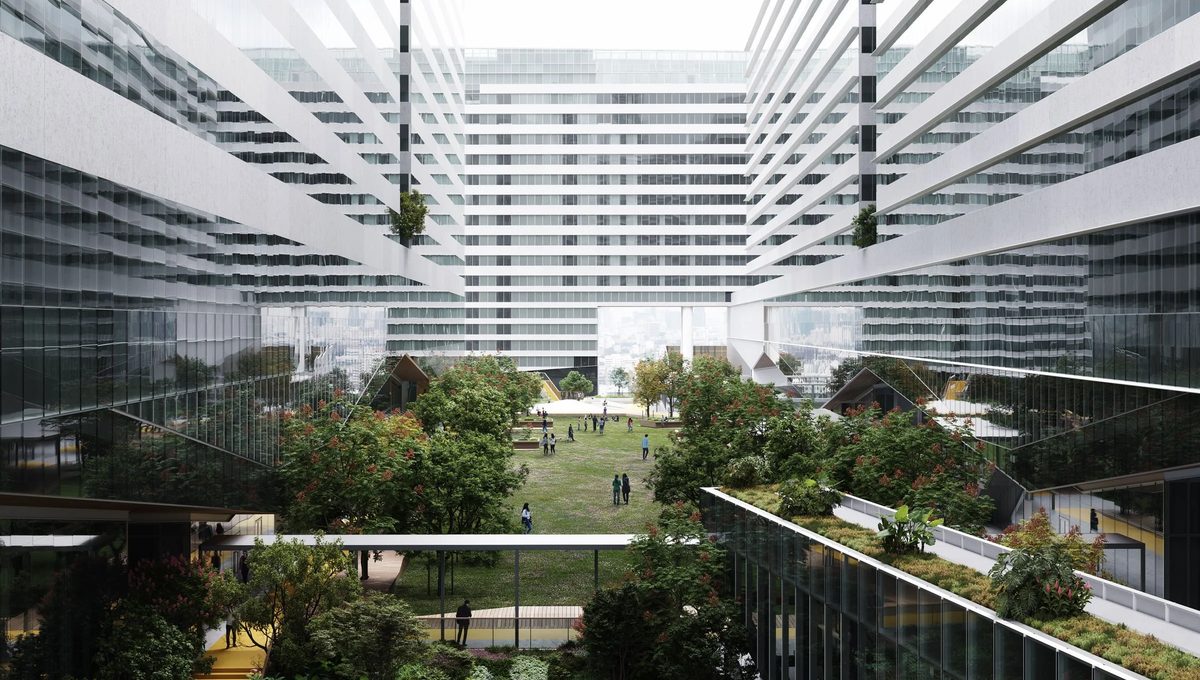
So where is this corridor, actually?
The shaded patch is the neighbourhood this guide covers: the sois around Bang Chak, Punnawithi and Udom Suk. Hover or tap any station for the train time from Punnawithi.
Three things the map makes obvious. This corridor is on the same one-seat line as everything that matters on Sukhumvit: Ekkamai is about eight minutes up the line, Thonglor ten, Asok sixteen. The green escapes are closer than they look: Bang Krachao across the river, plus Suan Luang Rama IX (the city's biggest park) and the Nong Bon lake, both 10 to 15 minutes east by car. And Suvarnabhumi, where nearly every international flight lands, is closer to here than to the "central" hotels most visitors book.
How to read a Bangkok address
Every Bangkok area fits one of three buckets, and knowing which one you are looking at does most of the work.
1. Prime is the proven core: Thonglor, Phrom Phong, Sathorn. You pay the most and you get certainty: a liquid resale market, tenants who always come, steady low-single-digit appreciation. The growth that made these areas famous already happened, which is exactly why they cost what they do.
2. Value areas sit close to the core without the same headline growth ahead of them: think Bearing, Samrong, the pockets past the mega-projects. You get proximity and a lower ticket, and the rent still works. What you give up is the catalyst; nothing big is scheduled to change the area's story, so the price tends to move with the city rather than ahead of it.
3. Growth corridors are the middle: real demand today, with the city's capital still visibly arriving and more upside due to materialize as the projects finish. This guide is about a growth corridor.
The informed way to be early is less glamorous than it sounds: follow where the government and the largest developers are actually pouring concrete, and you have a very good start. Train lines, expressways, the funded mega-projects. Buy the area the infrastructure points at, before the crowd reads the same map. And if you are buying a home rather than an investment, the same idea applies in plainer words: you want a place you like today that keeps getting better around you.
What this corridor is
For years this was ordinary residential Bangkok: low-rise housing, wet markets, motorbike taxis idling at the mouths of long sois. The green line only reached here in 2011, which is why the corridor still prices like an outsider while sitting next to the prime core. That is the gap the current wave of projects is closing.

True Digital Park
A tech and startup campus wired into Punnawithi station by covered skywalk, pitched as Southeast Asia's largest of its kind (~230,000 sqm on the developer's numbers). Its mall has 50+ restaurants, a cinema, a supermarket, a public library and a free rooftop running loop. This is why young professionals rent here.

Cloud 11
A 27-rai creator-economy complex by MQDC, the property arm of DTGO, the Chearavanont family enterprise behind CP. Production studios, Grade A+ offices, retail, two hotels and a 17,000 sqm rooftop park, Bangkok's largest. First phases opened from late 2025, still ramping through 2026 as tenants fit out.

The Bangkok Mall
Two stops east at Bang Na: a ~50 billion baht project by The Mall Group aiming to be among Southeast Asia's largest retail complexes, plus an 18,000-seat arena run by AEG, the operator behind London's O2. When something this size opens, crowds, tenants and repricing follow. The window that matters is before it finishes.
That is the case in one line: the demand is already here because of the offices and the train, and two city-scale reasons to visit are landing next door. The people who do best in areas like this are usually positioned before the ribbon-cuttings, not after.
The real risk here is not whether things get built; the cranes are up and the capital is committed. It is oversupply and timing. A lot of new condos are arriving on this corridor at once, so rents and resale can go sideways for a stretch while the market digests, and the big re-rating may only come when the Bangkok Mall actually opens. If your horizon is two years, that gestation period is a problem. If it is five to eight, it is mostly noise, but you should know it is there.
The feel of the place
This is the part that is hardest to get from listings and renders, and it is the part that decides whether you would enjoy living or owning here.
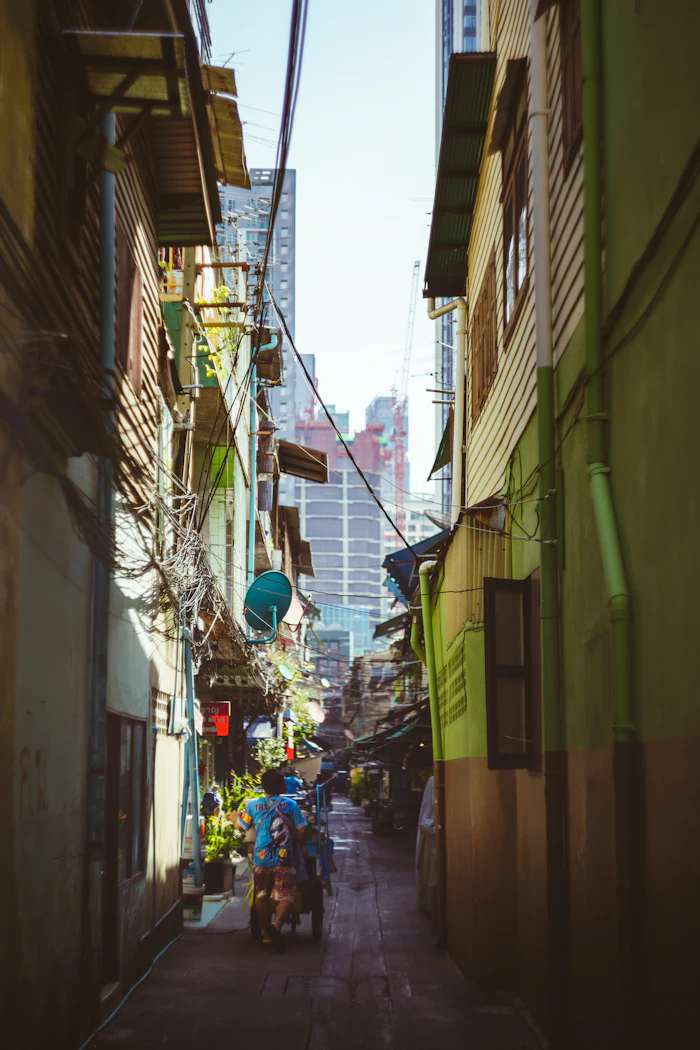


The corridor is Bangkok with the volume turned down. Each of the three stations has its own register. Bang Chak is the local, low-rise edge: a morning market, shophouse noodle joints, and a new wave of independent cafes moving in as inner-city rents push them east. Punnawithi is the centre of gravity, with the tech campus, the skywalk and the busiest sois. Udom Suk is the practical one: a long street-food strip down Soi 103, cheaper daily life, and the east door to Cloud 11. The crowd across all three is unshowy: Thai young professionals, a growing remote-work set, and a low-key expat contingent that chose calm and value over the scene up the line. That is the appeal.
Coffee, seriously

This stretch through Bang Chak and On Nut has quietly become one of the city's real specialty-coffee districts, cheaper rents than Thonglor pulling in independent roasters and a laptop crowd. Names people actually cross town for: Nita (the bake-and-brew spot tucked into Punnawithi Soi 11, 4.6 stars and weekend queues), ARCH right at the BTS, Sun Brew Coffee Bar on Soi 9, FO SHO BRO on Soi 33, and summ coffee and studio in the Bang Chak sois. There is even a 24-hour Starbucks near Udom Suk for the 3 a.m. deadline crowd. The density is the point: a serious flat white is a five-minute walk in most directions.
Where you'll actually eat

Street stalls and steamed-bun shops at the BTS exits sit a few doors from Vietnamese, southern Thai, Korean and Western spots, plus garden-style seafood joints deeper in the sois. Udom Suk's Soi 103 strip is one of east Bangkok's better late-night eating runs, and the Bang Chak morning market covers the other end of the day. Residents' own picks, pulled from local threads rather than listicles: Kler for Thai fusion, Shinla for Korean barbecue at a price-to-quality ratio people rave about, Kaixin for dim sum, Devilish Smokin' BBQ and Hungry Gluttn for the American end. Add the 50+ restaurants inside True Digital Park and the W District open-air food market two stops up. It is neighbourhood dining, not a destination scene, which is why residents rate it and rents stay reasonable. The one fair complaint: Western food thins out compared with On Nut, and residents lean on Grab to fill the gap.
Malls, from doorstep to mega
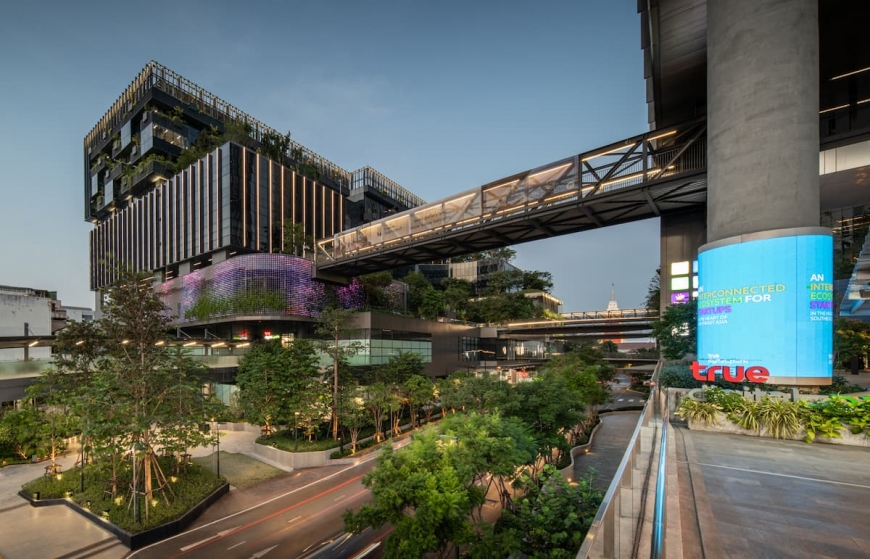
On the doorstep: 101 The Third Place, the mall attached to True Digital Park, with a cinema and a supermarket. One stop west: the Habito community mall in the T77 pocket, with an organic grocer and co-working. Five minutes east: Central Bangna and BITEC. Fifteen to twenty minutes up the line: EmQuartier and Emporium at Phrom Phong. And the Bangkok Mall is rising at Bang Na. You live in the quiet and reach every tier of retail on one line.
Nightlife, honestly light

Good local craft-beer bars and warehouse spots that fill with regulars at weekends, but this is not a party postcode. Residents take the ten-minute train to Thonglor or Ekkamai for the real night out and come home to the quiet. If nonstop buzz on the doorstep is the point, buy up the line and pay for it. If you want to visit the buzz and not live inside it, this is the trade you want.
Green space: the gap, and the workaround

The honest weak spot: no large public park in the corridor itself. The daily substitutes are True Digital Park's free rooftop running loop and Cloud 11's sky garden as it opens. By car, Suan Luang Rama IX, the city's biggest public park, and the Nong Bon lake (wakeboarding, sailing, a long waterside loop) are 10 to 15 minutes east. And the weekend answer beats most of central Bangkok's: Bang Krachao, the jungle-like "green lung" island in the river bend, is a short ride from Bang Na to the pier and a 10-baht ferry away. Rent a bike, ride the raised paths, hit the Bang Nam Phueng floating market. Most people up the line never bother; from here it is a casual morning.
Hospitals, schools, airports (the practical layer)
The family infrastructure clusters one or two stops away rather than on the doorstep, which is normal for Bangkok: the schools follow the older expat pockets.

- Hospitals. Thainakarin Hospital, a full-service private hospital, sits by the Bang Na interchange five minutes east. Sukhumvit Hospital is at Ekkamai, four stops up. The famous flagships (Samitivej Sukhumvit, Bumrungrad) are 15 to 30 minutes toward town. For daily-life medicine the corridor is well covered; for marquee international hospitals you ride up the line.
- Schools. Wells International (American curriculum) runs its main G1-12 campus minutes from BTS On Nut and an early-years campus at Bang Na. Bangkok Prep (British) is off Sukhumvit 77 near Phra Khanong, and St. Andrews' large Sukhumvit 107 campus sits down the line at Bearing. Anglo Singapore's east campus is in the Sukhumvit 64 pocket by Bang Chak. All are one seat on the train or a short drive, which is why families increasingly rent along this corridor.
- Airports. Suvarnabhumi (BKK), where nearly all international arrivals land, is roughly 30 minutes by car, 45 by transit. This corridor is one of the closest livable BTS stretches to it. Don Mueang (DMK), the budget-airline field on the far north side, is the trade-off: an hour or more by road. Frequent AirAsia flyers should weigh that; everyone else gains.
What locals know (and listings never mention)
- The train is younger than the iPhone 4S. The BTS only reached this corridor in August 2011; before that On Nut was the end of the line. Everything east of On Nut is a fifteen-year-old train neighbourhood wearing a fifty-year-old street grid, which is why you get real local life at these prices next to a startup campus.
- There is a skyscraper-sized temple hiding on Soi 101. Wat Dhammamongkol, a working Buddhist temple on Soi Punnawithi, has what is billed as Bangkok's tallest chedi at around 95 metres, housing a Buddha carved from a single multi-tonne block of jade. Most residents up the line have never heard of it.
- The airport maths flips the usual logic. Frequent flyers who land at Suvarnabhumi get home from here faster than from Siam or Sathorn. If your life runs through BKK departures, this corridor is more convenient than "central" Bangkok, not less.
- BITEC brings event-day demand. The exhibition centre at Bang Na runs trade shows and concerts year-round, five minutes away, and the 18,000-seat arena will scale that up. Short-stay and mid-term rental demand on event weeks is a quiet bonus landlords up the line do not get.
- The malls send buses for you. Mega Bangna (the IKEA mall) and Central Bangna run free shuttle buses from Udom Suk, so the car-free life extends to the big-box weekend.
- The one thing residents grumble about. Toward the Bang Na edge you get dust and cargo-truck traffic off the industrial corridor. Walk the block at rush hour before committing to a building on that side.
Getting around
Everything below is one seat on the green line, no change. Driving is slower and less predictable, which is why tenants here lean on the train. Motorbike taxis and red songthaews handle the deep-soi hops.
| Where | How far |
|---|---|
| Around the corridor markets, malls, BITEC, the Bang Krachao pier | Bang Chak and Udom Suk ~2 min by BTS; On Nut and Bang Na ~4 min |
| Up the line nightlife, offices, the interchanges | Thonglor and Ekkamai ~8-10 min; Asok ~16; Siam ~25-30, one seat, no change |
| Airports | Suvarnabhumi ~30 min by car (~45 by transit); Don Mueang 60+ min by road |
Who lives here, and who rents from you
Three kinds of tenant meet on this stretch.
1. People who work next door. True Digital Park staff, startup founders, studio and media people as Cloud 11 fills, remote workers who picked Bangkok and want a fast train, a good desk and a better coffee.
2. People who want the green line without the middle-of-the-line rent. Plenty of renters want Bangkok's main train line but not Thonglor or Phrom Phong prices, so they ride east until the rent fits: Ekkamai, On Nut, then here. This corridor is currently where that equation clears.
3. Solo expats, young couples, and a growing slice of families drawn by the schools around On Nut and Bearing. It is a broad, employment-anchored pool rather than one riding on nightlife or novelty, which is what makes the demand durable. Furnished one-beds here are among the best-value BTS-connected rentals in the city, which is the same sentence read from the tenant's side.
What it costs, and what it earns
Think of the corridor as a ladder, not a single product. Where you step on is a choice between maximum income and maximum liveability, and the yield falls as you climb toward the nicer, closer, newer unit. That is not a flaw in the market. It is the market telling you the truth.

~7-8% gross · 1-beds around 1.5M THB
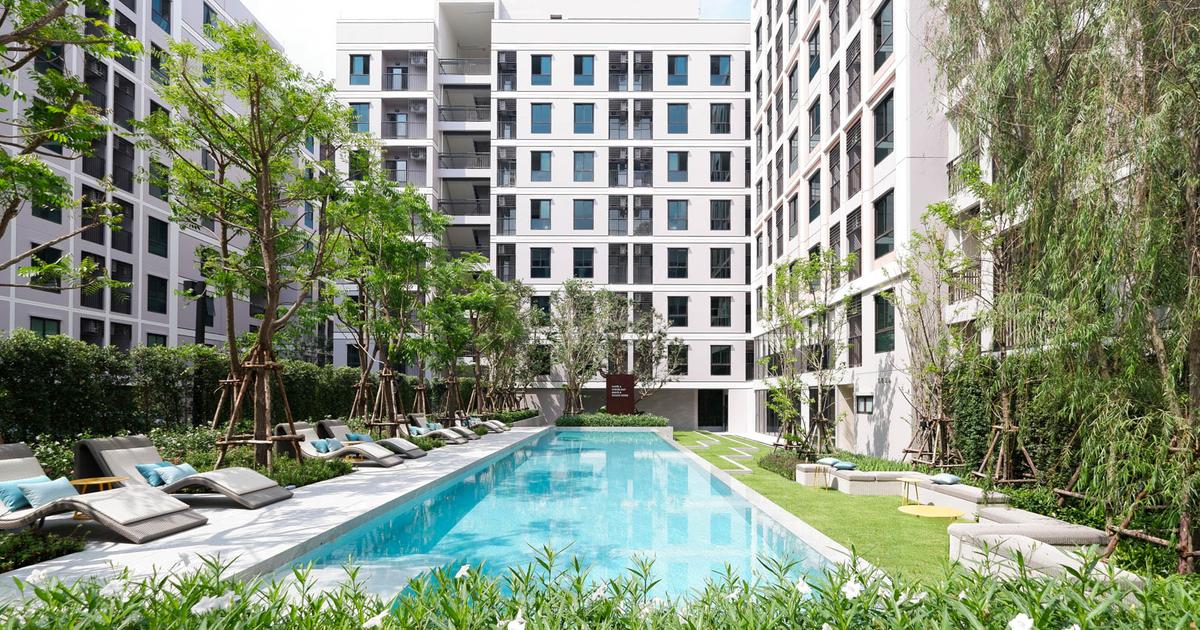
~6-7.5% gross · 1-beds around 1.8-2.2M THB
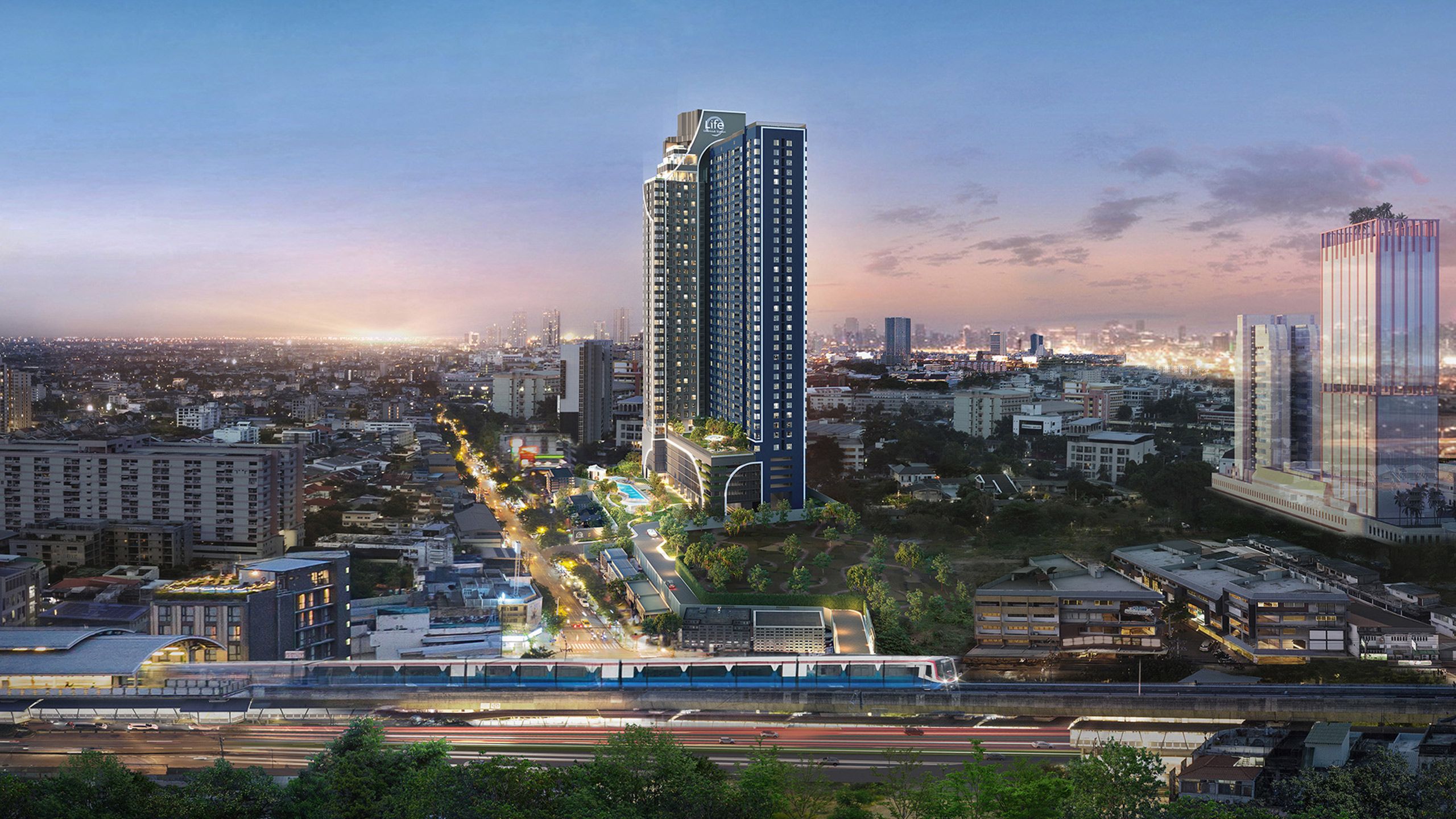
~4-5% gross · 1-beds around 4.2-5.0M THB
Which kind of buyer are you?
The income buyer
You want the rent to work and you do not need to love the lobby. Step onto the low rung, accept the older building and the shuttle, and take the yield. This corridor is one of the better places in Bangkok to do that on a BTS line.
The live-in or hybrid buyer
You might occupy it, or rent it out now and use it later. The middle rung is built for you: a fresh unit you would actually enjoy, in a neighbourhood with good coffee and a quiet street, still earning a respectable number. This is where most people should stand.
The growth-first buyer
You believe the corridor and want to hold through the Cloud 11 and Bangkok Mall build-out, on a 5 to 8 year horizon. Fine, but do it with eyes open: buy at a disciplined entry price, on today's rent, and let the re-rating be the bonus. Do not pay tomorrow's price today.
The one buyer this corridor genuinely does not suit is the entirely hands-off one. With this much new supply, choosing the right building and unit does more of the work than the address. That is where an advisor who knows the stock earns their keep.
Placing it against its neighbours
Versus On Nut, one stop west. On Nut is the more established, more visibly expat, denser-street-life sibling, with the markets and the T77 community, and it charges noticeably more for it. This corridor is quieter, newer and more tech-flavoured. If you want bustle and infrastructure now, lean On Nut; if you want calm and the growth runway, stay here.
Versus Thonglor and Ekkamai, up the line. The lifestyle and nightlife postcodes, pricier per square metre, with rents to match and yields near the prime floor. You are paying for scene and resale liquidity. This corridor trades that buzz for space, quiet and a materially lower ticket, and asks you to travel ten minutes for the big night out.
Versus Bang Na and Bearing, outward. Cheaper again, larger layouts, more car-dependent, and where the mega-projects physically land, along with the heaviest new supply. Choose outward for a lower entry price when walking to the train is not essential. Bang Chak-Punnawithi-Udom Suk is the seat between: real Sukhumvit address, walk-to-work hubs, corridor upside, without central pricing.
The bottom line
Bang Chak, Punnawithi and Udom Suk reward the buyer who wants a working rental on a real train line at an honest price, who likes good coffee and quiet streets, and who is happy to visit the nightlife rather than live on top of it. The corridor quietly punishes anyone who overpays for the future or buys a deep-soi unit on a station's name. Know your rung, pay for what exists, and get positioned before the mega-projects cut their ribbons. If you want to weigh it against On Nut, the eastern value pockets or a higher-yielding play elsewhere, that is exactly the comparison Nara is built to walk you through.
Frequently asked questions
Is Punnawithi a good area to invest in?
It suits a buyer who wants rental income on a BTS line at a lower entry price than central Sukhumvit, with a genuine growth runway from True Digital Park, Cloud 11 and the Bangkok Mall build-out at Bang Na. It is less suited to someone who needs prime-core liquidity or nightlife on the doorstep. Buy on the current rent, not the future story.
What rental yield can I expect around Punnawithi and Udom Suk?
Roughly 4 to 9 percent gross depending on where you step on the ladder, with older value units at the top of that range and newer, closer, larger units at the bottom. Net runs about 1 to 1.5 points lower after fees, withholding, management and vacancy. These are Tenara estimates; live rent comps should be checked per building.
How far is Punnawithi from central Bangkok and the airports?
About 16 minutes by BTS to the Asok interchange off-peak and 25 to 30 to Siam, one seat, no line change. Suvarnabhumi Airport is roughly 30 minutes by car (about 45 by transit), making this one of the closest livable BTS stretches to it. Don Mueang, on the far north side, is an hour or more by road.
What is Cloud 11 and is it open?
Cloud 11 is a large creator-economy complex by MQDC (the property arm of DTGO, the Chearavanont family enterprise behind CP Group) between Punnawithi and Udom Suk: studios, offices, retail, two hotels and a 17,000 sqm rooftop park, Bangkok's largest. It is structurally complete, with first phases opened from late 2025 and the rest ramping through 2026 as tenants fit out.
What is the Bangkok Mall and how close is it?
A ~50 billion baht project by The Mall Group at Bang Na, two BTS stops east, aiming to be among Southeast Asia's largest retail complexes, plus an 18,000-seat indoor arena for concerts and sport run by AEG, the operator behind London's O2. Opening timelines have moved and should be treated as estimates.
Is the area good for families?
Increasingly. Wells International is minutes from On Nut, Bangkok Prep is near Phra Khanong, St. Andrews Sukhumvit 107 is down the line at Bearing, and Thainakarin Hospital sits five minutes east at Bang Na. The trade-off is no large public park in the corridor itself; Bang Krachao and Cloud 11's sky garden are the workarounds.
Can foreigners buy a condo here?
Yes, freehold and in your own name, subject to the 49 percent foreign-ownership quota per project. A unit being available does not guarantee foreign quota is open on it, so confirm that first. Funds must be remitted from abroad in foreign currency to generate the Foreign Exchange Transaction certificate needed to register title, with the remitter name matching the buyer exactly.
Figures, prices and venue details in this guide come from developer material, public listings and other public sources at the time of writing, and they move faster than any page can. Treat every number as indicative rather than a quote, and confirm live pricing, availability and foreign-quota status with us before deciding anything. Nothing here is financial advice.
Thinking about this corridor?
Tell Nara your budget and whether you want income, a place to live, or both, and it will line up the buildings that actually fit and flag the ones to skip. No developer bias, no agent chasing.
Ask Nara about Punnawithi →