Sam Yan, Banthat Thong & the Chula belt: the growth corridor hiding inside the city core
One landlord, Chulalongkorn University, is rebuilding central Bangkok block by block. Real demand today, visible capital arriving, and one catch every buyer must understand: much of it is leasehold.
What it is
The quarter around MRT Sam Yan where Chulalongkorn University's property arm redevelops a vast land belt: Samyan Mitrtown, the Banthat Thong food boom, more blocks in the pipeline.
Where it sits
Dead centre. One MRT stop to Si Lom and the offices, one the other way to Hua Lamphong and Chinatown, Siam Square at the top of the belt, Lumphini Park up the road.
The numbers
1-beds roughly 4.5-8M THB. Gross ~4-6.5% by rung; net 1-1.5 pts lower. Leasehold stock prices about 20-30% below freehold, and that gap is the whole decision.
The life
Michelin-listed street food on Banthat Thong, a 24-hour study economy, campus green, malls from doorstep to Siam Paragon one hop north.
The catches
Tenure varies building to building here, so check it early. Rents breathe with the academic year, and nightlife is food-street energy rather than clubs.
The play
Growth-corridor logic inside the core: buy the demand that already exists (students, doctors, office workers), treat the landlord's pipeline as the bonus, and choose freehold or leasehold on purpose.
So where is this belt, actually?
The shaded patch is the neighbourhood this guide covers: the Chulalongkorn University land belt between Rama I and Rama IV, from Banthat Thong across the campus to Sam Yan. Hover or tap any station for the train time from Sam Yan.
Three things the map makes obvious. First, this is the geographic middle of the city: Siam Square touches the top of the belt, the Silom offices are one MRT stop south, Chinatown one stop west, Lumphini Park a stop east. Second, the shaded area has a single landlord, the university, which is why change here arrives on a schedule rather than by accident; nobody assembles land, because the land was never broken up. Third, the western edge runs toward Hua Lamphong, the century-old rail terminus whose long-distance trains have already moved out; the blocks between Sam Yan and that station are the city core's most obvious next seam.
How to read a Bangkok address
Every Bangkok area fits one of three buckets, and knowing which one you are looking at does most of the work.
1. Prime is the proven core: Thonglor, Phrom Phong, Sathorn. You pay the most and you get certainty: a liquid resale market, tenants who always come, steady low-single-digit appreciation. The growth that made these areas famous already happened, which is exactly why they cost what they do.
2. Value areas sit close to the core without the same headline growth ahead of them: think Wutthakat across the river, or the pockets past the eastern mega-projects. You get proximity and a lower ticket, and the rent still works. What you give up is the catalyst; nothing city-changing is scheduled, so the price tends to move with the city rather than ahead of it.
3. Growth corridors are the middle: real demand today, with capital still visibly arriving and more upside due as the projects finish. Usually that means the city's edge, Punnawithi or Bang Na. Chula-Samyan is the rare central one: the demand is core-of-the-city proven, and the building is still happening, because the landlord releases its land one block at a time.
That combination is unusual enough to spell out. In most of central Bangkok the growth is finished and priced in. Here, one institution controls a belt of more than a thousand rai and redevelops it on long leases at its own pace: Siam Square, then Samyan Mitrtown, then the Banthat Thong strip, with residential towers between Soi Chula 26 and 32 in the published pipeline. You can read the next decade of this neighbourhood off the landlord's own masterplan, which is a luxury no other central address offers.
What this belt is
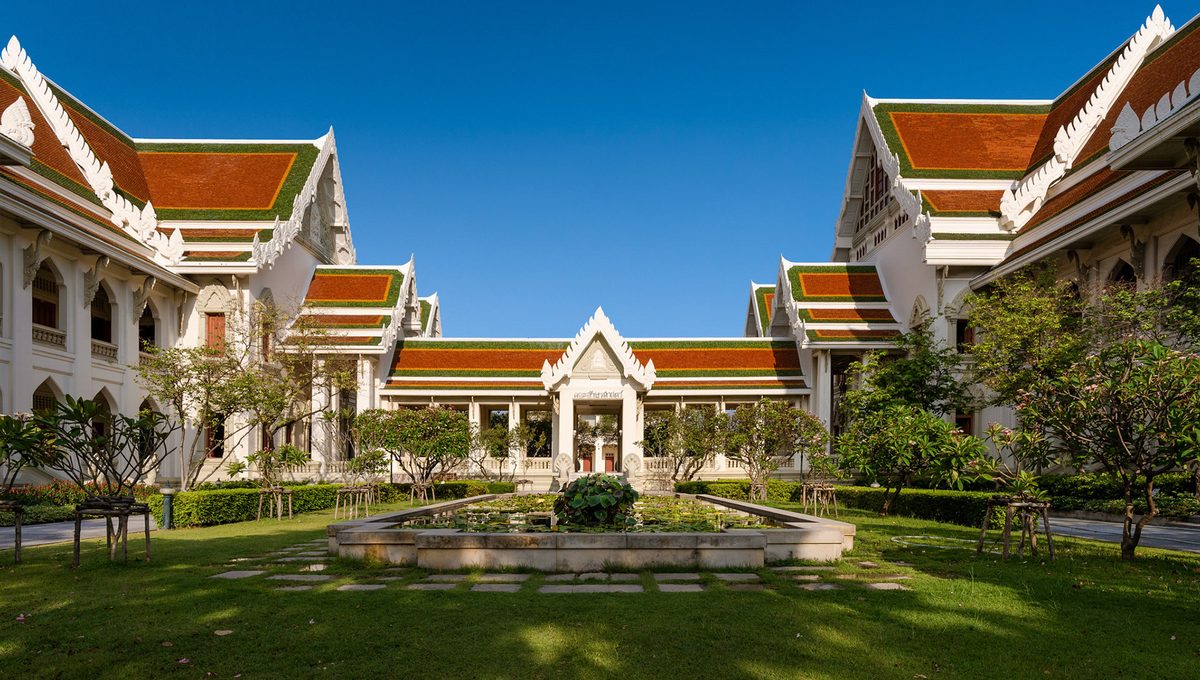
Chulalongkorn University, founded in 1917 and Thailand's oldest, was endowed a century ago with a huge tract of what became downtown Bangkok. Its property arm, the Property Management of Chulalongkorn University, known locally as PMCU, now runs that estate: roughly 1,153 rai bounded by Rama I, Phaya Thai, Henri Dunant and Rama IV, including Siam Square itself. The commercial districts it manages fund the university, and it redevelops them one block at a time on long leases to major developers. Three pieces tell you how that plays out.

Chulalongkorn & PMCU
Tens of thousands of students, staff and researchers on a campus that anchors the whole belt, plus a property arm that plans it like a single estate. Its published pipeline includes twin residential towers of 50 and 43 storeys between Soi Chula 26 and 32. When one owner controls the land, the buyer can read the plan instead of guessing.

Samyan Mitrtown
The 9-billion-baht test case on 14 rai of university land at Sam Yan Intersection: a 222,000 sqm complex by Golden Land (TCC Group) with a mall, offices, a hotel, the leasehold Triple Y Residence and a famous 24-hour zone. Open since September 2019 and busy at hours most malls are dark, because the study crowd never stops.

Banthat Thong
A street of football-shirt shops beside the national stadium turned, in a few years, into one of Bangkok's most talked-about food strips: Michelin Bib Gourmand shophouses, viral dessert bars, queues past midnight. The Commerce Ministry now promotes it as a global street-food landmark. Foot traffic like this is what re-rates a neighbourhood.
That is the case in one line: the tenants are already here because of the university, the hospital and the offices one stop away, and the landlord is still opening new blocks on a published plan. The people who do best in areas like this are positioned before the next ribbon-cuttings, provided they buy the right tenure, which is the part most listings gloss over.
Curated growth cuts both ways. As the landlord upgrades Banthat Thong, rents on the strip have risen enough that some decades-old vendors have moved out, a tension covered openly in the Thai press. A managed neighbourhood keeps improving, and it keeps changing; buy it knowing both halves of that sentence. One practical note: tenure varies here, with some towers on university land sold as registered leases and the Rama IV side freehold, so confirm which one any quoted price refers to.
The feel of the place
This is the part listings cannot show: the belt is really three registers stitched together by the campus.


Sam Yan itself is the polished register: Mitrtown's glass, Chamchuri Square over the MRT, hospital staff and office workers at lunch. The campus in the middle is the quiet one, lawns and century-old faculties, and it goes properly calm at night, which nearby residents count as a feature. Banthat Thong is the loud one, neon and queues from late afternoon past midnight. And the western edge toward Hua Lamphong is the unfinished one: older shophouses, printing shops, the odd photogenic failure like Dragon Town, a Chinese-styled retail lane that never filled up and became a street-photography set instead. The crowd across all of it is young, Thai-first and studious in a way no other central district is; the flip side is fewer Western expats on packages than Sukhumvit, and a neighbourhood that resets a little every academic year.
Where you'll actually eat (the headline act)

Banthat Thong and the Sam Yan sois hold one of the densest good-value eating runs in Bangkok. Jeh O Chula, sixty-plus years old, has held a Michelin Bib Gourmand year after year since 2018; its late-night tom yum with instant noodles draws queues that start well before the pot does. Tang Sui Heng, a Michelin-listed duck specialist, anchors the old-school end, and around them run Thai-Chinese shophouses, grilled-seafood windows and the dessert bars that keep going viral. Inside Mitrtown, Samyan Food Legends collects long-running Sam Yan vendors under air-conditioning. The fair warning: the strip's success has pushed rents up, and a few old names have moved on; eat the classics while they are there.
Coffee and the 24-hour study economy

The university sets the rhythm here, and the rhythm is caffeine. Cafes cluster along Banthat Thong and the sois for a crowd that studies in public: CHALONG runs its flagship on the strip, Treasure pulls queues by Mint Tower, and a dozen smaller rooms fill the blocks between, and the anchor is free: Samyan CO-OP inside Mitrtown, a 500-seat reading and working hall open 24 hours, conceived with Kasikornbank. The mall's 24-hour zone around it means a real meal, a supermarket and a desk exist at 3 a.m., which is a genuine oddity in Bangkok and part of why students and night-shift medical staff rent nearby.
Malls, from doorstep to Paragon

Mitrtown on the doorstep covers daily life: Big C Foodplace, the House Samyan arthouse cinema, food courts and the 24-hour zone. Chamchuri Square sits directly over the MRT. One hop north is the Siam cluster, Siam Square (the same landlord), MBK, Siam Discovery and Siam Paragon, which is most of Thai retail in one postcode. Two MRT stops east, the Rama IV money lands: Central Park at Dusit Central Park is open by the Sala Daeng corner, and One Bangkok, billed by its developer as Thailand's largest private-sector project, keeps opening in stages. You will not exhaust this radius.
Nightlife, honestly: food first

The night out here is eating, and it runs late and loud. What the belt does not offer is a bar scene: no cocktail row, no clubs, and the campus blocks go quiet after dark. Silom is one MRT stop for that, Thonglor a longer ride. Students treat this as normal, owners should treat it as a filter: tenants who want nightlife on the doorstep rent elsewhere, and the ones who rent here stay for the commute, the food and the study economy.
Green space: better than central usually gets

The belt has its own park: Chulalongkorn University Centenary Park, opened for the university's hundredth year and engineered to soak up monsoon runoff, a working piece of flood infrastructure you can jog in. The campus quads add everyday green, and Lumphini Park, the city's classic 360-rai lung, is one MRT stop or a 15-minute walk along Rama IV. For a central-Bangkok address this is an unusually good green ration; the prime Sukhumvit sois mostly do worse.
Hospitals, schools, airports (the practical layer)
The practical layer is strong on medicine, honest on international schools.

- Hospitals. King Chulalongkorn Memorial Hospital, the Thai Red Cross flagship and the university's teaching hospital, is one of the country's largest medical complexes and sits at the belt's eastern corner by MRT Si Lom. The private Silom cluster (BNH, Bangkok Christian) is one stop away. For everyday and for serious medicine alike, few Bangkok addresses sit closer.
- Schools. This is a university district first. The Chulalongkorn Demonstration School is among Thailand's most sought-after Thai-curriculum schools, with entry to match. The big international schools, the ones expat packages pay for, cluster toward Sathorn and the Sukhumvit corridor instead, so foreign families with school-age children usually end up there. Buy here for a student or a professional tenant, not for the international-school run.
- Airports. Suvarnabhumi is roughly 40 minutes by car via the expressway ramps off Rama IV, or about an hour by MRT with a change to the Airport Rail Link at Phetchaburi. Don Mueang is 45 to 60 minutes by road. Central position, average airport runs: fine for most, worth pricing in for weekly flyers.
What locals know (and listings never mention)
- Siam Square has the same landlord. The university estate runs from Rama I to Rama IV, and Siam Square's rents help fund the university. The belt you are buying beside is managed by an institution planning in decades, with a published masterplan, which is rare comfort in a city of one-off towers.
- Banthat Thong's first trade was sport, and the origin explains the boom. The street served the national stadium next door with football shirts and gear for decades; cheap shophouses plus student foot traffic is exactly the substrate food booms grow on. Some of the shirt shops are still there between the queues.
- The stadium brings match nights. Suphachalasai National Stadium at the top of Banthat Thong hosts football and concerts, which floods the strip on event evenings. Fun if you are eating, relevant if your unit faces the road.
- Hua Lamphong is a frontier, so treat it as a footnote. The 1916 dome still stands and local trains still call, but the long-distance services moved to Krung Thep Aphiwat in 2023. The State Railway of Thailand has published mixed-use redevelopment intentions that preserve the landmark, with no committed date. If it happens, the blocks between Sam Yan and the station re-rate; buy nothing on that assumption.
- Dragon Town is the cautionary tale. A Chinese-styled retail lane on the belt's western edge opened to catch the tourist wave and never filled; today it is mostly a backdrop for photographers. Even a disciplined landlord misses sometimes, which is worth remembering when you underwrite the pipeline at full value.
- The academic calendar is the tide. Around the university, rooms let fast before semesters and slower in the long break. Owners who time listings to the intake, and who accept 10 or 12-month terms, stay fuller than owners who fight the cycle.
Getting around
The belt walks well, the MRT Blue Line does the rest, and the top edge touches the BTS at National Stadium and Siam. Taxis on Rama IV move; Phaya Thai Road at rush hour does not.
| Where | How far |
|---|---|
| Around the belt campus, Mitrtown, Banthat Thong, the hospital | Mostly walking; Si Lom and Hua Lamphong ~2 min by MRT; Lumphini ~4 |
| Into the rest of the centre offices, Siam, Sukhumvit | Silom offices one stop + walk; Siam Square ~10 min up Phaya Thai Rd or two BTS stops from Sala Daeng; MRT Sukhumvit interchange ~10 min |
| Airports | Suvarnabhumi ~40 min by car (~60 by MRT + Airport Rail Link via Phetchaburi); Don Mueang ~45-60 by road |
Who lives here, and who rents from you
Three pools, all anchored to institutions that do not move.
1. The university economy. Students, exchange students, lecturers and researchers at Chulalongkorn, tens of thousands of people cycling through on the academic calendar. Parents of students are also steady buyers here, which supports resale in a way pure-investor districts lack. The catch is the calendar itself: expect a softer letting patch in the long break and price for 10 to 12-month terms.
2. The medical cluster. King Chulalongkorn Memorial Hospital's doctors, nurses, residents and medical students, plus the longer stays a major hospital generates. Night-shift schedules make the 24-hour neighbourhood a genuine amenity rather than a gimmick.
3. Silom and Sathorn professionals. The financial district is one MRT stop; Mitrtown's own office tower adds white-collar demand inside the belt. These tenants pay for the commute-plus-food-street combination and skew the rent range upward from the student floor.
What it costs, and what it earns
Three built, freehold options frame the belt, from the campus doorstep to the Sathorn edge. Where you step on is the usual trade between ticket, polish and walk-to-station distance, and all three are stock you can view this week.


Tenure in this belt varies building to building: towers on university land sell as registered leases and price lower, while the streets toward Rama IV are freehold. The three above are all freehold, built, and viewable this week. Pricing moves with resale supply, so ask us for live availability rather than trusting a screenshot.
Which kind of buyer are you?
The income buyer
The leasehold rung was built for you: lower ticket, fatter cash yield, tenants on tap from three institutions. Go in knowing the exit: the asset amortises, buyers of second-hand leases are fewer, and your return must be earned in rent, not in resale hope. Model it like a long bond with a building attached.
The appreciation buyer
Stay on the freehold side of Rama IV and pay the premium. You get the same demand engines with land under your title, plus the optionality on the Hua Lamphong seam and the landlord's pipeline next door. Buy at a disciplined price on today's rent; the pipeline is the bonus, never the basis.
The parent buyer
A real segment here: buying a unit for a child studying at Chulalongkorn, using it for four years, then renting or selling. The maths often beats four years of rent, the belt is safe and walkable at student hours, and the resale story writes itself to the next parent. Freehold makes the hand-off cleaner.
The buyer this belt suits least is the trophy-and-nightlife one. If the evening scene and an address your friends already know matter most, Thonglor and Sathorn do that job better, at their price.
Placing it against its neighbours
Versus Silom-Sathorn, one stop south. The financial district proper: deeper prime liquidity, an international tenant pool, higher tickets, and the growth mostly behind it. Choose it for certainty and the office-tower tenant; choose Chula-Samyan for the campus economy and a landlord still building.
Versus Siam-Ratchathewi, at the top of the belt. Hyper-central retail-and-transit Bangkok, priced accordingly, with hotel-grade intensity. Sam Yan gives you most of that centrality one register calmer and meaningfully cheaper per square metre.
Versus Chinatown and the Hua Lamphong edge, one stop west. Character, heritage shophouses and the city's best-known food tourism, but thin new-condo stock and no scheduled catalyst beyond the station question. That direction is the romantic frontier; this belt is the planned one.
The bottom line
Chula-Samyan rewards the buyer who wants central Bangkok demand with a growth story still in progress, and who is willing to do one piece of homework most buyers skip: choosing tenure deliberately. Rent the leasehold logic if income is the goal, pay for freehold if the exit matters, and in either case buy on the rent that exists today, with the landlord's pipeline as upside rather than justification. The belt quietly punishes anyone who buys a 30-year asset at a forever-asset price. If you want to weigh a unit here against Silom, Siam or a leasehold-versus-freehold pair side by side, that is exactly the comparison Nara is built to walk you through.
Frequently asked questions
Is Sam Yan / Chula-Samyan a good area to invest in?
It suits a buyer who wants proven central-Bangkok rental demand (university, teaching hospital, financial district one stop away) with visible growth still arriving as Chulalongkorn University's property arm redevelops its land belt. The essential homework is tenure: much of the newest stock on university land is 30-year leasehold, while freehold sits mostly across Rama IV at a higher price. Decide which instrument you are buying before comparing prices.
What does leasehold actually mean here, and should I avoid it?
On university land you buy a registered right to the unit for the lease term, typically 30 years, rather than permanent ownership. It prices roughly 20 to 30 percent below comparable freehold, so cash yields look better, and there is no foreign-quota constraint. The trade: value tends to decline as the term shortens, resale buyers are fewer, and banks lend against it reluctantly, so treat it as an income product bought mostly with cash. Avoid it only if your plan depends on selling at appreciation twenty years from now.
What rental yield can I expect around Sam Yan?
Roughly 4 to 6.5 percent gross on Tenara's estimates from listing comps: leasehold stock at the top of the range because of its lower entry price, freehold around 4 to 5 percent. Net runs about 1 to 1.5 points lower after fees, withholding, management and vacancy, and the academic calendar can add a soft letting patch mid-year. Check live comps per building and per tenure.
Who would rent my unit here?
Three institutional pools: Chulalongkorn students, exchange students and staff on the academic cycle; doctors, nurses and medical students from King Chulalongkorn Memorial Hospital; and Silom-Sathorn professionals one MRT stop away, plus office workers in Mitrtown's own tower. Deep and renewable, but timed to intakes; price for 10 to 12-month terms and list before semesters start.
What is happening on Banthat Thong?
A former sports-shop street beside the national stadium has become one of Bangkok's busiest food destinations: Michelin Bib Gourmand shophouses like Jeh O Chula, decades-old Thai-Chinese kitchens, viral dessert bars, queues past midnight, and a Commerce Ministry plan to promote it internationally. The honest footnote is that rents on the strip have risen sharply on three-year contracts, and some long-standing vendors have relocated as the street upgrades.
How far is it from the offices, Siam and the airports?
MRT Si Lom is one stop (about 2 minutes) for the Silom-Sathorn offices, Lumphini Park is one to two stops or a 15-minute walk, and Siam Square sits at the top of the belt, roughly 10 minutes up Phaya Thai Road. Suvarnabhumi is about 40 minutes by car or an hour by MRT with an Airport Rail Link change at Phetchaburi; Don Mueang is 45 to 60 minutes by road.
Can foreigners buy a condo here?
Yes, two ways. Freehold in your own name, subject to the 49 percent foreign-ownership quota per project, with funds remitted from abroad in foreign currency to generate the Foreign Exchange Transaction (FET) certificate needed to register title, remitter name matching the buyer exactly. Or leasehold, where the 49 percent quota does not apply because you are registering a lease rather than title; the FET remittance discipline is still the clean way to bring money in. Confirm tenure and quota before falling for a floor plan.
Figures, prices and venue details in this guide come from developer material, public listings and other public sources at the time of writing, and they move faster than any page can. Treat every number as indicative rather than a quote, and confirm live pricing, availability and foreign-quota status with us before deciding anything. Nothing here is financial advice.
Thinking about the Chula belt?
Tell Nara your budget and whether you want income, a place to live, or a unit for a student in the family, and it will line up freehold and leasehold options side by side and flag the ones to skip. No developer bias, no agent chasing.
Ask Nara about Chula-Samyan →