Rama 9, Ratchada & Huai Khwang: Bangkok's second central business district, two stops from Asok
The offices are full, the Metro runs under the street, and four night markets trade past midnight. You are buying the city’s second business district at a discount to its first.
What it is
Bangkok's second central business district, already at work: the Stock Exchange of Thailand, AIA Capital Center, G Tower, Unilever's Thailand headquarters, with Huai Khwang's 24-hour street life to the north.
Where it sits
MRT Blue Line, ~5 min to Asok (2 stops), 1 stop to the Airport Rail Link connection, ~14 min to Si Lom. Orange Line interchange under construction next door.
The numbers
1-beds roughly 2.8-4.7M THB. Gross ~4-6%; net about a point lower. Area rents rose ~8-14% in a year while prices sat flat.
The life
The "new Chinatown" food strip on Pracha Rat Bamphen, four night markets within a couple of stops, the Royal City Avenue clubs, a 24-hour market. Working city, never a showpiece.
The catches
Prices are up from a few years ago and supply is elevated, as it is across greater Bangkok; the true oversupply sits on the outer fringes. Here the question is choosing the right building, not whether the district works.
The play
A steady-growth hold in a proven district. Pay for what exists today; the Orange Line and the district build-out keep compounding on top, just do not bank on an outsized re-rating in the next three or four years.
So where is this district, actually?
The shaded patch is the ground this guide covers: the Rama 9 intersection, the Ratchadaphisek office spine, and Huai Khwang's dense residential streets to the north. Hover or tap any station for the train time from Phra Ram 9.
Three things the map makes obvious. This district sits on the MRT Blue Line with Asok two stops away and the Sukhumvit core a five-minute ride, which is the connectivity most "up-and-coming" areas can only promise. Phetchaburi station, one stop south, connects across the road to Makkasan and the Airport Rail Link, so Suvarnabhumi is a train ride rather than a taxi gamble. And a second line is being built into the district: from Thailand Cultural Centre, one stop north, the Orange Line runs east through Ramkhamhaeng to Min Buri, putting the eastern suburbs' workforce a direct ride from these offices, and its planned western section continues through Pratunam and the old town, which would make that station one of the city's few double-interchange hubs.
How to read a Bangkok address
Every Bangkok area fits one of three buckets, and knowing which one you are looking at does most of the work.
1. Prime is the proven core: Thonglor, Phrom Phong, Sathorn. You pay the most and you get certainty: a liquid resale market, tenants who always come, steady low-single-digit appreciation. The growth that made these areas famous already happened, which is exactly why they cost what they do.
2. Value areas sit within easy reach of Silom, Sathorn and the core at clearly lower prices, with no scheduled mega-catalyst on the calendar: the Thonburi bank around Wutthakat and Talat Phlu is the house example. You get more square metres for the money and a commute the postcode does not advertise; what you accept is price growth that tracks the city rather than running ahead of it.
3. Growth corridors are the middle: real demand today, with the city's capital still visibly arriving and more upside due to materialize as the projects finish. Punnawithi and Bang Na are the house examples.
Rama 9 sits between the first and third buckets, and placing it correctly is the whole point of this guide. The demand side is as proven as Thonglor's: a working central business district with offices, trains and a tenant pool that renews itself. The growth side is quieter than a young corridor's but real, because the Orange Line interchange is under construction next door and Central Pattana is rebuilding the retail core, so the district keeps compounding. What you should not expect is an outsized re-rating in the next three or four years; the big run on the second-business-district story already happened, so the curve from here is steady rather than steep. Buying a story that has already materialized is a legitimate steady-growth play; you get a certainty the frontier buyer never gets, and you give up the moonshot.
What this district is
Rama 9 (Phra Ram 9) is the intersection Bangkok designated as its new central business district over the last fifteen years: office towers, the stock exchange, the Central Rama 9 and Grand Rama 9 complexes. Huai Khwang, the district wrapped around it, is older, denser and more local: a 24-hour market, a large Thai-Chinese community, the Ratchada entertainment strip. Central, busy, unpretentious. That working-city character is exactly why it rents so reliably, and it is worth separating from the sales story built on top of it.

The office cluster
Within the same few blocks: the Stock Exchange of Thailand, Unilever's Thailand headquarters, Huawei's Thailand base filling six floors of G Tower alongside major tech and corporate tenants, AIA Capital Center's Grade A roster, and the Chinese Embassy. Institutions of this weight anchor salaried demand for decades, and they attract each other, which is how a business district compounds.

Central GR9 (Grand Rama 9)
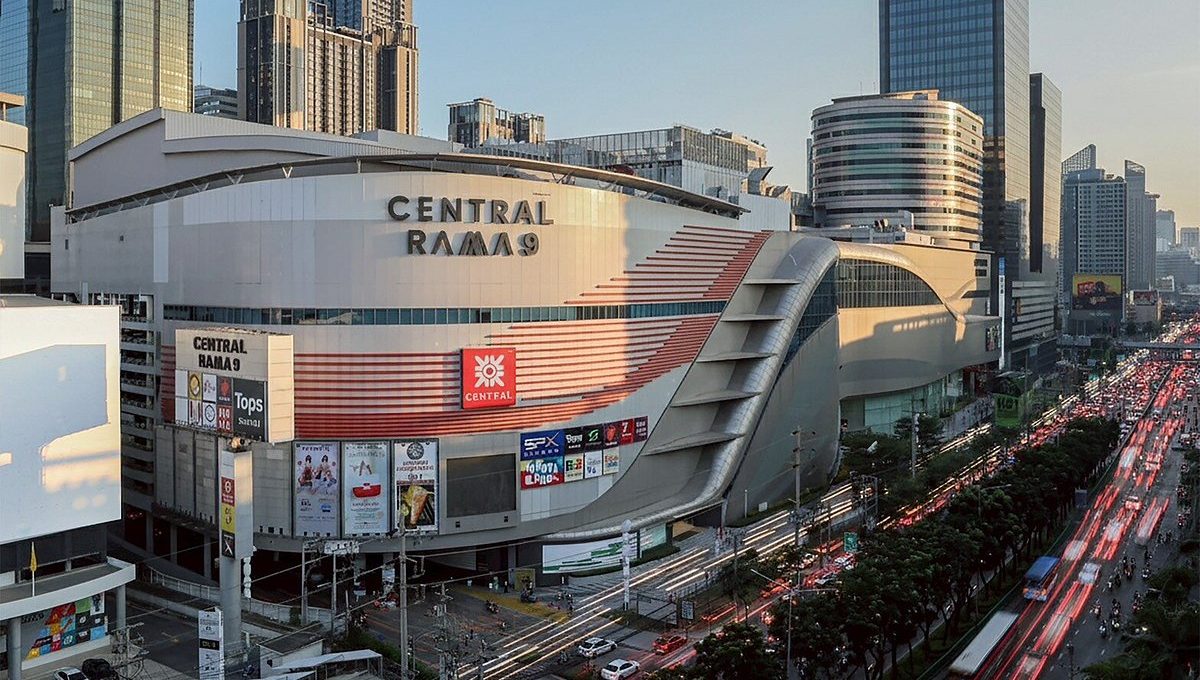
Central Pattana is folding Central Rama 9, G Tower, R House and The Ninth Tower into one 73-rai district plan of roughly 1.1 million square metres across phases, on the developer's numbers, with the retail reopening reported from early 2028. Read the number for what it says: developers commit capital at that scale to one intersection when they expect it to anchor the city's second centre for decades.

The Orange Line
The Orange Line meets the Blue Line at Thailand Cultural Centre, one stop north. Its eastern section runs out through Ramkhamhaeng to Min Buri, targeted around 2028 on current reporting, which puts the eastern suburbs' workforce a direct ride from these offices. The western section is planned to continue through Pratunam and the old town, which would make Thailand Cultural Centre one of the city's few double-interchange hubs; that leg is closer to a 2030 story.
That is the case in one line: the offices, the trains and the tenants are real today, the rents are rising, and the two big future stories (the Grand Rama 9 build-out, the Orange Line) compound on top. The discipline is simply paying a sensible price per square metre, and the current market makes that easier, because elevated supply gives the buyer the negotiating room.
Prices here ran up in the boom years and have been flat to slightly down through 2025-26, and unsold supply is elevated, as it is across greater Bangkok; the genuinely oversupplied zones are the outer fringes, where towers went up without a district around them. Here the district plainly works, so the real question is which building, at what price per square metre. The Chinese buying wave that helped drive the boom has cooled, while Chinese tenant demand has stayed strong, which is why rents rose while prices sat still. Add it up and the caveats mostly land in the buyer's favour: a working central business district, still priced well below the Sukhumvit core, where sellers have to compete for you.
The feel of the place
Two districts share one intersection, and the contrast is the character.


South of the Rama 9 intersection it looks like the renders promised: glass towers, mall plazas, office workers streaming out of the MRT at 8:45. Walk ten minutes north up Ratchadaphisek and the city reasserts itself. Huai Khwang is old Bangkok density: a market that never fully closes, gold shops, massage rows, the 24-hour Ganesha shrine at the intersection, and a swelling mainland-Chinese community that has turned Pracha Rat Bamphen Road into what locals call the new Chinatown. Residents live between the two registers: earn in the towers, eat in the sois. Tenants like exactly that mix, which is why the rental market here is deeper than the condo pricing charts suggest.
Coffee: an office-crowd scene, growing fast

The cafe scene here tracks the office towers: new specialty openings keep arriving with the workforce, on top of every franchise tier from the international chains down to the Thai ones. Two names locals rate near the intersection: Anonymous Coffee, the specialty roastery in Huai Khwang, and Little Wood, the garden cafe in Rama 9 Soi 15/1, plus a rotating cast of small Thai and Chinese cafes toward the market. Thonglor still has more cafes per block; here the scene is younger and growing with the towers that feed it.
Where you'll actually eat

Huai Khwang is Bangkok's new Chinatown, and the point is the range: genuine regional diversity, cooked by recent arrivals, layered over a classic Thai late-night market district. Along Pracha Rat Bamphen Road that means Dongbei (northeastern Chinese) dumpling houses like Old Dongbei Mother's Dumpling House by Huai Khwang MRT, Ren Ren Xiang flying the Hunan flag across two branches, and Tongwei ladling Sichuan-style malatang. The strip is also one of the first landing zones for mainland Chinese food franchises entering Thailand, which is what a district with pull looks like. Around it, the Huai Khwang market keeps Thai street food running essentially 24 hours, and the malls carry every chain you would expect.
Malls and daily retail
).jpg/960px-G_Tower_Bangkok_(The_Grand_Rama_9_(New_CBD)).jpg)
Central Rama 9 is a full-scale Central Group mall directly above the MRT station and connected to it underground: roughly eight floors, hundreds of shops, and the usual anchor set of department store, supermarket, cinema and the international franchise tier, with the GR9 build-out adding to it in phases. Fortune Town across the intersection is the IT and electronics mall, still where office workers go for a laptop repair at lunch. Up Ratchadaphisek, The Street Ratchada is the late-night mall, meaning food, gyms and services that run into the small hours and in parts around the clock, with Esplanade and Big C Ratchada covering the weekly shop. Daily life here runs on the MRT and on foot; the roads themselves jam like everywhere central in Bangkok.
Nightlife: Royal City Avenue and the night market

Two engines. Jodd Fairs Ratchada, the night market next to Big C on Ratchadaphisek, runs 700-plus stalls from 5 p.m. to 1 a.m., three minutes from Thailand Cultural Centre station. And RCA (Royal City Avenue), one of the city's officially designated nightlife zones, runs its club blocks between Rama 9 and Phetchaburi roads, with Route 66 still packing three music rooms after two decades. The practical read for an owner: this is real, durable footfall for tenants who want a city that stays up, and a noise check worth doing before you buy anything facing RCA or the market.
Green space: the genuine weak spot

There is no significant public park in the Rama 9-Huai Khwang core, and the area's canyon-like main roads make that gap feel real. The workarounds are decent because the train is fast: Benjakitti Park's forest boardwalks are about seven minutes down the Blue Line at Queen Sirikit, and Chatuchak Park is about fifteen minutes north. Do not let a listing sell you "near Rama IX park"; Suan Luang Rama IX shares the king's name and sits on the far east side of the city, half an hour away. Runners here use the parks by train or the gym in the building.
Hospitals, schools, airports (the practical layer)
The healthcare layer is a genuine strength; the school layer is thinner than the expat postcodes, which shapes who rents here.

- Hospitals. Praram 9 Hospital, a private hospital accredited by the Joint Commission International that has grown into a 16-storey complex, sits in the district itself and runs an hourly shuttle from Phetchaburi MRT. Bangkok Hospital's flagship campus on Soi Soonvijai, off New Phetchaburi Road, is a short drive south. For medical access this is one of the better-served districts in the city.
- Schools. KIS International School's original campus sits in the Kesinee pocket of Huai Khwang, roughly ten minutes by car, and that is the main international option nearby. The famous British and American schools cluster in other districts, so school-run families mostly look elsewhere. The practical consequence for an owner: your tenant pool here is office workers, couples and singles rather than families.
- Airports. Suvarnabhumi: one MRT stop to Phetchaburi, cross to Makkasan, then the Airport Rail Link runs about 30 minutes. Door to door around an hour without touching traffic. Don Mueang: the expressway ramps at Din Daeng are close, so roughly 30 to 45 minutes by car outside rush hour. Few Bangkok districts serve both airports this evenly.
What locals know (and listings never mention)
The next five points are paraphrased from resident threads on the Bangkok subreddit; treat them as lived detail rather than verified fact.
- The neighbourhood runs four night markets within a couple of stops. The One Ratchada behind Esplanade, Jodd Fairs Ratchada next to Big C, The Street Ratchada's 24-hour mall, and the Huai Khwang night market up at the intersection. Residents treat that spread as the area's defining perk: whatever hour you get home, something is open.
- The street food behind Fortune Town is a local favourite. Residents point there ahead of the strips the guidebooks know: after-work crowds, Thai prices, and it turns over nightly. A useful lunch test when you are viewing units near the intersection.
- Chain gyms cluster here unusually densely for the price point. Fitness First, Jetts and the Fitness 24/7 tier all operate within a few stops, which residents put down to the office towers and the young renter base.
- Huai Khwang market barely closes. The market and the streets around it run essentially around the clock, and the Ganesha shrine at the intersection draws worshippers at two in the morning. Night-shift city life is the district's actual amenity, and tenants who work odd hours pay for it.
- The Orange Line is two different timelines, and residents keep them straight. The eastern section from Thailand Cultural Centre through Ramkhamhaeng to Min Buri is targeted around 2028 on current reporting, and it brings the eastern suburbs' workforce a direct ride from these offices. The western section through Pratunam and the old town, the leg that would make Thailand Cultural Centre a double-interchange hub, is closer to 2030. Salespeople quote the first date and imply the second benefit.
Getting around
Everything below is by MRT from Phra Ram 9 unless noted. Ratchadaphisek and Rama 9 roads jam hard at rush hour, so most tenants here organise the daily commute around the train and keep the car, if they own one, for trips out of town.
| Where | How far |
|---|---|
| Around the district the night market, the office spine, RCA | Thailand Cultural Centre ~2 min (Jodd Fairs, Orange Line interchange); Huai Khwang ~4 min; Sutthisan ~6 min; RCA is a short ride down Rama 9 Road |
| Into the core offices, interchanges, the parks | Sukhumvit/Asok ~5 min (2 stops); Queen Sirikit and Benjakitti Park ~7 min; Si Lom ~14 min; Chatuchak ~15 min north |
| Airports | Suvarnabhumi: 1 stop to Phetchaburi, cross to Makkasan, then ~30 min on the Airport Rail Link; Don Mueang ~30-45 min by expressway from the Din Daeng ramps |
Who lives here, and who rents from you
Three kinds of tenant meet at this intersection, and together they are the durable half of the Rama 9 case.
1. People who work in the towers. The stock exchange, the head offices filling G Tower, AIA Capital Center and The Ninth Tower, and the wider Ratchadaphisek office spine generate walk-to-work demand every year, in every market. This is a working business district, and its tenants renew.
2. The Chinese and international community. The Chinese embassy, the Thai-Chinese neighbourhoods of Huai Khwang and the businesses along Pracha Rat Bamphen anchor a deep, self-renewing tenant pool. The important split: this tenant demand has stayed strong even while Chinese buyer demand cooled. Rents rose while prices stalled, and that is the cleanest evidence of which half is real.
3. Connectivity tenants. People who want the Sukhumvit core five minutes away and the airport link one stop away, without paying Asok rents. Two stops of distance buys them a meaningful discount, and they take it in numbers.
What it costs, and what it earns
Rama 9 is a mid-priced business district; there is no budget tier here the way there is in Thonburi, because you are paying for genuine centrality. What makes the numbers work in 2026 is the squeeze in your favour: rents climbed roughly 8-14% over the past year while entry prices flattened, which quietly lifts the yield on a disciplined purchase. Three options to think about, cheapest per square metre to dearest.
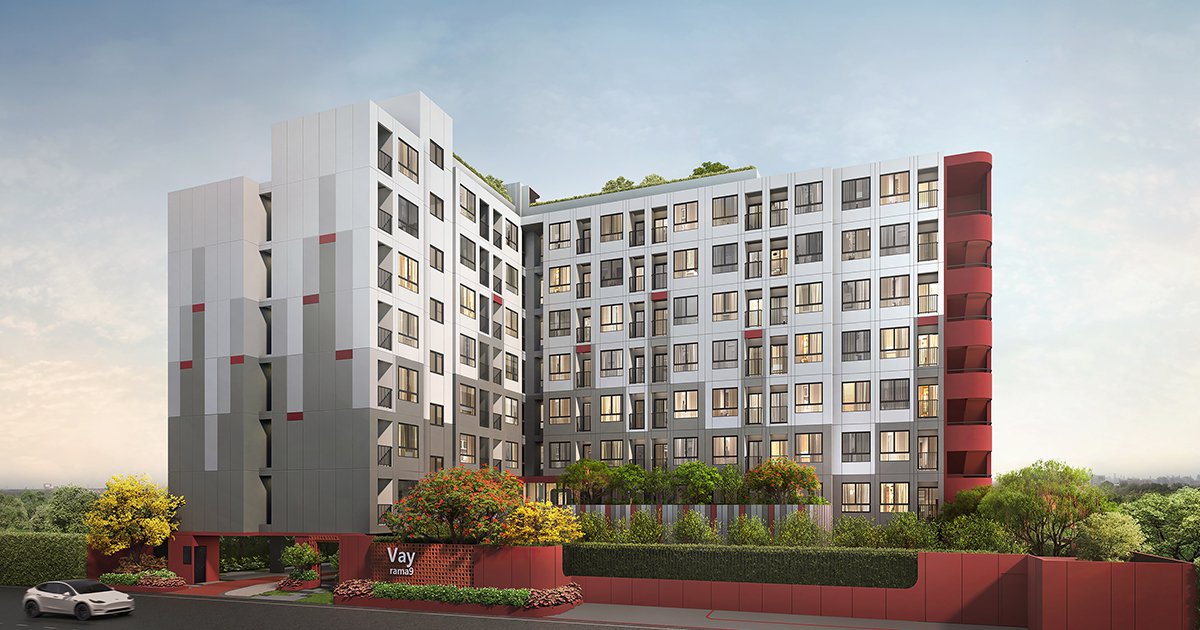
~5-6% gross · 1-beds around 2.8-3.3M THB
Vay Rama 9 · sansiri.com · developer render
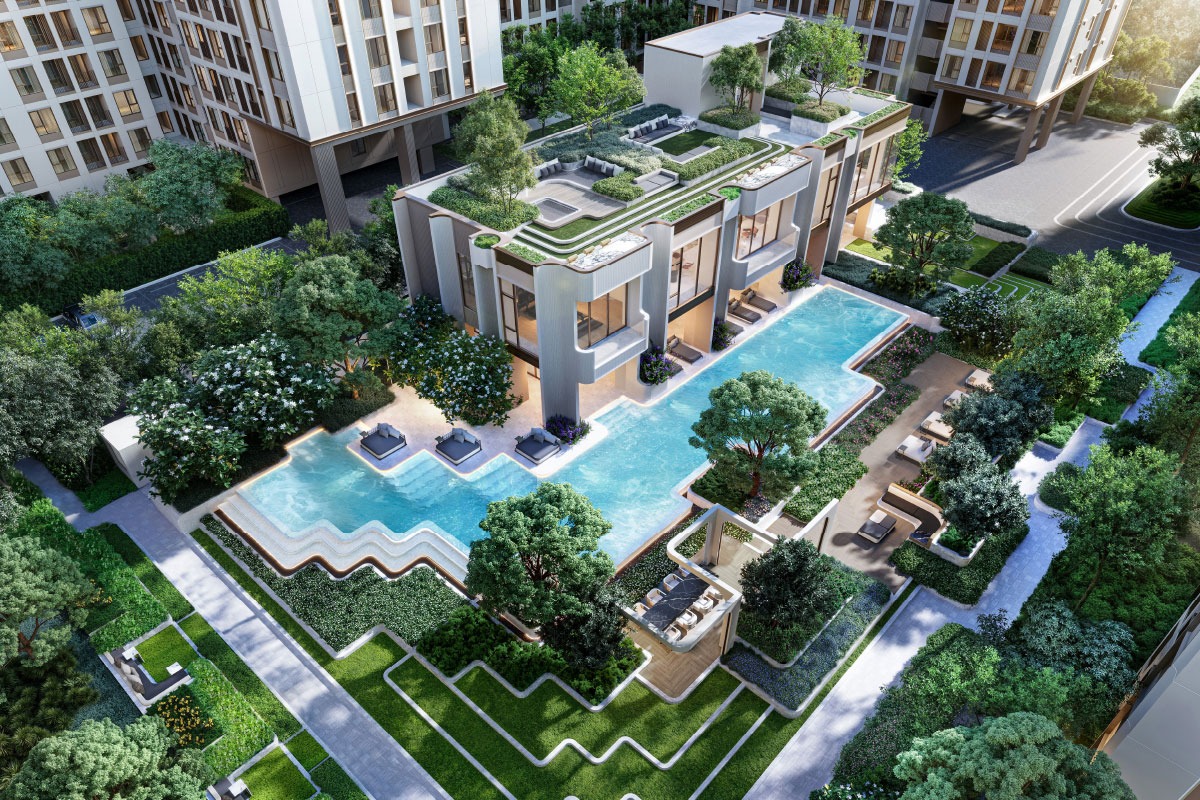
~4.5-6% gross · 1-beds around 3.2-4.8M THB
Life Ratchada-Rama 9 · apthai.com · developer render
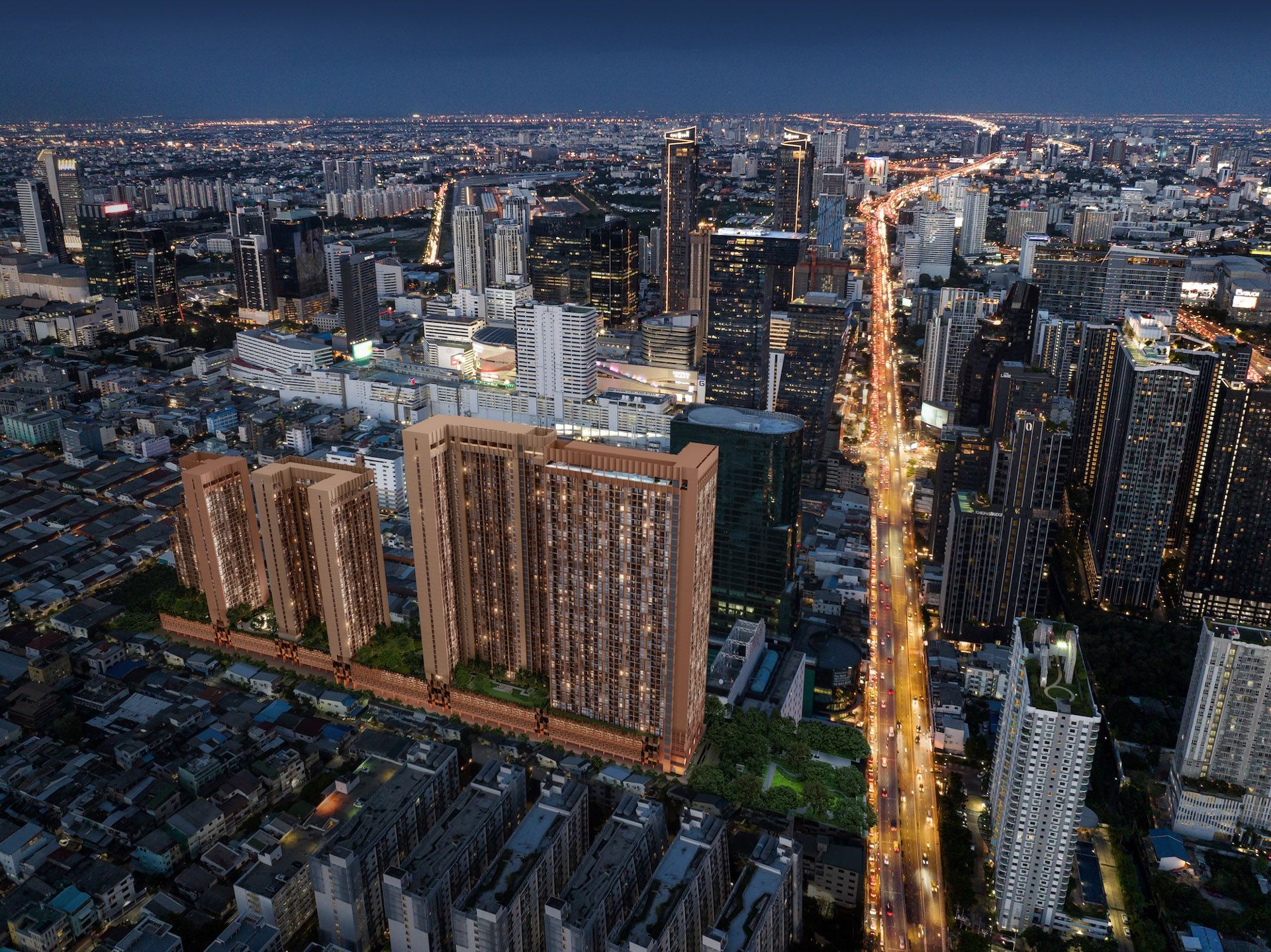
~4% gross · 1-beds around 4.0-4.7M THB · completes 2029
Nue Epic Asok-Rama 9 · noblehome.com · developer render
Which kind of buyer are you?
The income buyer
This is your district, eyes open. You want a central, recession-resistant rental in a working business district, and you are disciplined on the entry price per square metre. Rising rents reward you, the deep tenant pool protects you, and you never needed the second boom to make the purchase work.
The appreciation chaser
Be careful here. If your whole thesis is "Rama 9 will double again," the recent data argues for patience: prices have been flat since the boom years and supply is still being absorbed. An emerging corridor like Punnawithi or Bang Na is a more honest home for a growth bet, because there the catalyst is still ahead of the price.
The status buyer
Rama 9 carries real business-district prestige, and the address impresses in Bangkok business circles. But if a trophy is the point, prime Sukhumvit or Sathorn holds status more durably, with the resale liquidity to match. Here the smart money buys the tenant; the postcode comes free.
The buyer Rama 9 genuinely rewards wants steady compounding from a proven district and stays disciplined on the entry price. In a district with this much stock to choose from, that discipline, plus choosing the right building, does more work than the address itself.
Placing it against its neighbours
Toward Asok (Phetchaburi, Sukhumvit). One and two stops south. Pricier the closer you get to the Sukhumvit core, and the airport rail connection at Makkasan sits on this side. Rama 9's quiet trump card is that most of that connectivity comes at a two-stop discount.
Thailand Cultural Centre and Huai Khwang, north. The Orange Line interchange, the night market and the new-Chinatown streets. Denser, more local, strong rental churn, generally friendlier pricing than the towers at the intersection itself. For pure income at this MRT cluster, the north end often pencils better.
Ratchada toward Sutthisan. The nightlife-and-value stretch further up the Blue Line. A similar working-city story at a friendlier ticket, without the office cluster on the doorstep. Worth a look when the Rama 9 quote refuses to come down to a sensible per-square-metre level.
Versus the growth corridors (Punnawithi, Bang Na). Different purchases. Those are bets that the price catches up to committed infrastructure; Rama 9 is a hold on rent that already exists. Send the upside hunter east; keep the income buyer here.
The bottom line
Rama 9 and Huai Khwang reward the buyer who wants a strong, central, working rental with growth still arriving: real offices, two train lines meeting, a tenant pool that renews itself, and rents that rose through a flat market. Prices are up from a few years ago and supply is elevated, which is precisely what hands a disciplined buyer the negotiating room. Buy at a sensible price per square metre and let the Orange Line and the district build-out compound on top. If you want to weigh a specific Rama 9 quote against ready stock at the same station, or against a growth corridor further east, that is exactly the comparison Nara is built to walk you through.
Frequently asked questions
Is Rama 9 a good area to invest in?
Yes, and the case is proximity: a genuine central business district two stops from Asok, with deep tenant demand and rents that rose roughly 8-14% in a year. On price, the big run already happened, so expect steady compounding rather than another spike, with the Orange Line and the Grand Rama 9 build-out arriving on top. Buy at a sensible price per square metre and the district does the rest.
Is Rama 9 oversupplied?
Supply here is elevated, as it is across greater Bangkok after the last building cycle; the genuinely oversupplied zones are the outer fringes, where towers went up without jobs or trains around them. In Rama 9 the district plainly works, so the question is choosing the right building at the right price. Elevated stock is the buyer's negotiating power, and tenant demand stayed strong throughout, which is why rents rose while prices sat flat.
What rental yield can I expect around Rama 9 and Huai Khwang?
Roughly 4 to 6 percent gross depending on entry price, with value entries near the top of that range and the priciest branded stock near the bottom. Net runs about a point to a point and a half lower after fees, withholding, management and vacancy. These are Tenara estimates from area comparables, confirmed per unit before quoting.
When does the Orange Line open?
The eastern section from Thailand Cultural Centre through Ramkhamhaeng toward Min Buri is in systems installation, targeted around 2028 on current reporting; it brings the eastern suburbs' workforce a direct ride from this district. The western section, planned onward through Pratunam and the old town and the leg most relevant to property values here, is closer to 2030. Treat both as reported targets, and be wary of pitches that quote the first date with the second leg's benefits.
Where is Jodd Fairs now?
The original Jodd Fairs on the Rama 9 plot closed in January 2025 when its lease ended. Operations consolidated at Jodd Fairs Ratchada, next to Big C on Ratchadaphisek Road, about three minutes' walk from Thailand Cultural Centre MRT, running 700-plus stalls from 5 p.m. to 1 a.m. daily.
How far is Rama 9 from Asok and the airports?
Asok is two MRT stops, about five minutes. For Suvarnabhumi, ride one stop to Phetchaburi, cross to Makkasan and take the Airport Rail Link, about 30 minutes on the train. Don Mueang is about 30 to 45 minutes by expressway outside rush hour, with ramps close by at Din Daeng.
Can foreigners buy a condo here?
Yes, freehold and in your own name, subject to the 49 percent foreign-ownership quota per project. A unit being available does not guarantee foreign quota is open on it, so confirm the remaining quota in the specific building before committing. The purchase money must be remitted from abroad in foreign currency so the receiving bank can issue the Foreign Exchange Transaction certificate (the FET), which the Land Department requires to register the title, and the remitter's name must match the buyer's exactly.
Figures, prices and venue details in this guide come from developer material, public listings and other public sources at the time of writing, and they move faster than any page can. Treat every number as indicative rather than a quote, and confirm live pricing, availability and foreign-quota status with us before deciding anything. Nothing here is financial advice.
Weighing a Rama 9 quote?
Tell Nara the project and the price and it will show you the per-square-metre comparison against ready stock at the same station, plus what the rent actually supports. No developer bias, no agent chasing.
Ask Nara about Rama 9 →