Thonglor & Ekkamai: Bangkok's lifestyle capital, where you pay for proof
The restaurants, the schools, the tenants and the resale depth are all real, and all priced in. You are buying certainty here, and certainty is the most expensive thing on Sukhumvit.
What it is
Bangkok's lifestyle prestige district: the Sukhumvit 55 spine and its sois, with Ekkamai (Soi 63) as the calmer, slightly cheaper sibling one stop east. Restaurants, cafes, community malls, a deep Japanese expat layer.
Where it sits
BTS Thong Lo (E6), dead centre of prime Sukhumvit. Phrom Phong and the EM District malls 1 stop, Asok interchange ~5 min, Siam ~13. Suvarnabhumi ~35-40 min by car.
The numbers
New 1-beds from ~5.6M THB; new high-end launches can pass 300,000 THB per sqm. Gross ~3-5%, near the prime floor; net about a point lower. The premium buys liquidity, not yield.
The life
Michelin rooms and izakaya counters, The Commons and Marché Thonglor, a 24-hour Don Don Donki, cocktail bars people fly in for. School run on foot at Bangkok Prep; Samitivej up the soi.
The catches
The highest tickets on Sukhumvit, yields near the prime floor, soi traffic at dinner hour, and constant venue churn: even a decade-old anchor like 72 Courtyard closed in late 2025.
The play
Buy certainty on purpose: tenant depth, resale liquidity, own-stay optionality. The entry price does the work here, because the address will not rescue an overpriced launch.
So where is Thonglor, actually?
The shaded patch is the ground this guide covers: the long sois of Thonglor (Sukhumvit 55) and Ekkamai (Sukhumvit 63), running north from the BTS up to Phetchaburi Road. Hover or tap any station for the train time from Thong Lo.
Three things the map makes obvious. First, this is the centre of the prime stretch: Phrom Phong and the EM District malls are one stop, the Asok interchange is about five minutes, Siam about thirteen, all one seat on the green line. "Thonglor" on a listing can mean a spot beside the station or a home deep in the soi, and which suits you is appetite rather than arithmetic: this is the rare district where deep-soi is the lifestyle people come for, since The Commons and most of the good nights out sit mid-soi, and residents run on condo shuttles and motorbike taxis without a second thought. Third, the practical layer sits unusually close for a nightlife postcode: Samitivej Sukhumvit Hospital is up Soi 49, Bangkok Prep's primary campus is beside the station, and the airport run is a straight expressway shot east.
How to read a Bangkok address
Every Bangkok area fits one of three buckets, and knowing which one you are looking at does most of the work.
1. Prime is the proven core: Thonglor, Phrom Phong, Sathorn. You pay the most and you get certainty: a liquid resale market, tenants who always come, steady low-single-digit appreciation. The growth that made these areas famous already happened, which is exactly why they cost what they do. This guide is about the prime bucket's headline act.
2. Value areas sit within easy reach of the core at clearly lower prices, with no scheduled mega-catalyst on the calendar: the Thonburi bank around Wutthakat and Talat Phlu is the house example. More square metres for the money, price growth that tracks the city rather than running ahead of it.
3. Growth corridors are the middle: real demand today, with the city's capital still visibly arriving and more upside due to materialize as the projects finish. Punnawithi and Bang Na are the house examples.
Buying prime is a legitimate strategy with its own logic, and it is worth stating plainly what that logic is. You are paying for what has already been proven: a tenant pool that renews itself without a single ribbon-cutting, a resale market where banks, agents and foreign buyers all have comparable stock to price against, and an address you could enjoy living in tomorrow. What you are giving up is the easy mispricing that exists in less obvious places. If your whole thesis is "Thonglor will double," you are using a growth-corridor model on a prime asset, and the numbers will disappoint you. If your thesis is "I want the strongest tenants, the fastest resale and a unit I would happily use myself," this is the district that thesis was written about.
What Thonglor is
Thonglor is one long soi, Sukhumvit 55, plus the grid of numbered side-sois hanging off it, and Ekkamai is its parallel twin two sois east. Japanese companies began settling their families here decades ago, and the neighbourhood grew up around that money: good hospitals, good schools, good groceries, and then, on top of the family layer, the restaurant and bar scene that made the name famous. It is one of the easiest Bangkok addresses to explain to a foreign buyer because the case makes itself in a single afternoon's walk.

The dining engine
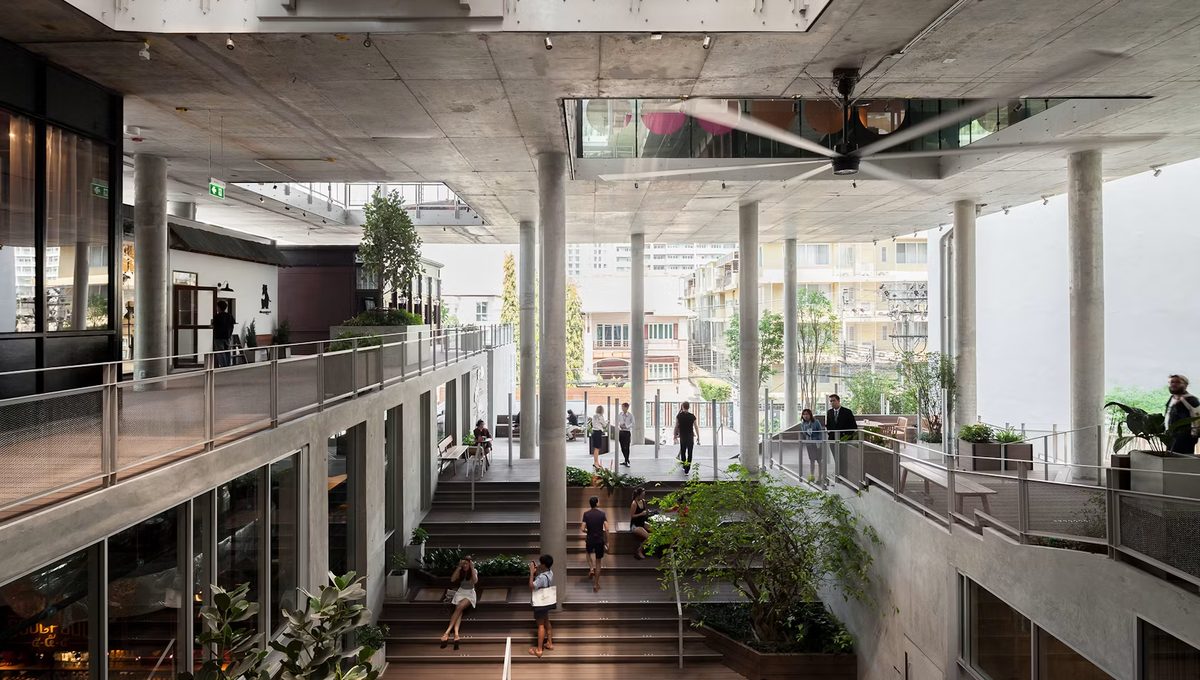
The Commons on Thonglor Soi 17 is the community mall the rest of Asia copied, anchored by Roots, the specialty roaster that grew up inside it. Marché Thonglor added several floors of restaurants and a big Tops supermarket in 2023. Above the street food and the izakaya counters sits real fine dining: R.HAAN holds two Michelin stars in the 2026 guide, with starred rooms like NAWA and GOAT on the Ekkamai side. People pay rent specifically to live near this.

The Japanese layer
The district's quiet backbone is its Japanese community: corporate families on multi-year leases, Japanese supermarkets and kindergartens, and the 24-hour Don Don Donki mall on Soi 63 feeding all of it. Samitivej Sukhumvit Hospital, a JCI-accredited private hospital popular with Japanese families, sits up Soi 49, and Bangkok Prep's primary campus is beside Thong Lo BTS. This layer is why tenancy here is long and steady, not just fashionable.

Ekkamai
Ekkamai runs the same lifestyle at a lower temperature: quieter residential sois, craft beer bars and studios instead of the flashiest openings, the Japanese-themed Gateway Ekamai mall at the station, and rents and tickets a meaningful notch below Soi 55. Plenty of people shop for a home in Thonglor and sign in Ekkamai once they see the two numbers side by side. Same train, same scene, slightly more space for the money.
That is the case in one line: the demand here needs no future event, because the restaurants, the hospital, the schools and the tenants are all already in place and renewing themselves. The whole question is the price you pay to join.
Here is what the proof costs. Entry prices are the highest on Sukhumvit: new high-end launches in Thonglor and Phrom Phong can pass 300,000 THB per square metre, and gross yields sit near the prime floor at roughly 3 to 5 percent, often lower at the trophy end. The scene itself also churns constantly; 72 Courtyard, a decade-old nightlife anchor, closed for good in October 2025, and the venue your tenant loves today will be three different venues over your holding period. None of that breaks the case. It just means the address will not rescue a weak purchase: the discipline in prime is the entry price per square metre, and the good news is that a market where developers are clearing inventory gives a patient buyer real negotiating room.
The feel of the place
One district, three registers: the spine, the sois, and Ekkamai.


The spine is the show: community malls, showrooms, cafe terraces, a slow crawl of cars at dinner hour. Step one soi off it and the register changes completely; the side-sois are leafy, low-rise and surprisingly quiet, old family compounds sitting next to new boutique condos, which is where most of the actual living happens. Mornings belong to the school run and the brunch crowd, evenings to the restaurant bookings. Ekkamai plays the same tune slower: fewer showpieces, more residents, and a big-box practical strip (Gateway Ekamai, Big C, Donki) that Thonglor itself never bothered to build. The crowd across both is Bangkok's most international: Japanese families, Western and regional professionals, Thai creatives and old Thai money, all paying for the same thing, which is never having to plan an evening in advance.
Coffee: the city's deepest bench

Thonglor is where Bangkok's specialty coffee scene grew up, and Roots at The Commons is its senior institution: a Thai roaster working directly with farming families in the north, supplying half the good cafes in town. Around it the density is absurd in the best way: brunch rooms, Japanese kissaten-style counters, and a new opening most months across Thonglor and Ekkamai. Punnawithi and On Nut may have taken the value crown for laptop days, but the ceiling is here.
Where you'll actually eat
The honest answer is "everywhere, at every price." The top end is real: R.HAAN holds two Michelin stars in the 2026 guide for its Thai tasting menus, and the Ekkamai side answers with starred rooms like NAWA and GOAT. Below that sits the district's real daily strength, the Japanese mid-range: sushi counters, ramen bars and izakayas run for the resident Japanese community, which keeps standards honest. The Commons covers the family weekend, Marché Thonglor the supermarket run and the casual dinner, and the soi mouths still do street food after midnight. You can live here a year and not repeat a restaurant, which is exactly what the rent is paying for.
Malls: community scale here, mega scale one stop away

Thonglor deliberately does small: The Commons, Marché Thonglor, J Avenue and a string of boutique community malls up the soi, plus the 24-hour Donki on the Ekkamai side and Gateway Ekamai at the next station. The department-store tier is one BTS stop west, where the EM District (Emporium, EmQuartier and Emsphere) covers everything from a supermarket to luxury flagships. That split is the neighbourhood's whole retail personality: village on your soi, mega-mall two minutes away by train.
Nightlife: the reason the name travels

This is Bangkok's cocktail district. Rabbit Hole, the three-storey speakeasy behind an unmarked wooden door on the spine, turned ten in 2025 and has been a fixture of Asia's 50 Best Bars conversation for years; around it runs a strip of listening bars, natural wine rooms and clubs that reinvents itself roughly every eighteen months. Ekkamai adds the craft beer end. The churn is half the fun and half the warning: venues come and go, the district's pull stays. If you want quiet on the doorstep, buy in the deep sois or in Ekkamai, and visit the noise instead of living over it.
Green space: the honest gap

There is no real park in Thonglor or Ekkamai, and the sois are for strolling, not running. The workaround is Benjakitti Park, the forest-boardwalk park by Queen Sirikit: ride to Asok and walk, about 15 to 20 minutes door to door, and it is one of the best urban parks in Asia when you get there. Runners here otherwise live on building gyms and rooftop tracks. If daily green space is non-negotiable, weigh this gap honestly before you fall for the restaurants.
Hospitals, schools, airports (the practical layer)
This is the district where the practical layer and the lifestyle layer sit on the same block, which is rare in Bangkok and is a large part of what the price buys.

- Hospitals. Samitivej Sukhumvit, one of Bangkok's best-known private hospitals and a JCI-accredited one, sits off Soi 49 on the district's western edge, minutes from the Thonglor sois; it is a fixture of Japanese expat life here. Sukhumvit Hospital covers the Ekkamai end, and Bumrungrad at Nana is a short ride up the line. For private healthcare access this stretch is about as good as Bangkok gets.
- Schools. Bangkok Prep (British curriculum) runs its primary campus on Sukhumvit 53, effectively beside Thong Lo BTS, with its secondary campus a short drive east off Sukhumvit 77. Wells International's early-years campus sits in the Soi 51 pocket. The wider international-school belt (NIST at Asok, the On Nut cluster) is one seat on the train. Families here can genuinely do the school run on foot, which almost nowhere else on prime Sukhumvit offers.
- Airports. Suvarnabhumi is roughly 35 to 40 minutes by car on the expressway east. By train, ride to Asok or Phaya Thai and connect to the Airport Rail Link, about an hour door to door. Don Mueang, on the far north side, is 45 to 60 minutes or more by road depending on traffic.
What locals know (and listings never mention)
The points below are pulled from resident threads and local press rather than brochures; treat the lived detail as lived detail, not verified fact.
- The address and the station can be 2 km apart. Soi 55 runs all the way to Phetchaburi Road, and the fashionable mid-soi stretch around Sois 10 to 17 is a motorbike-taxi ride from the BTS, not a stroll. Residents budget for the bike fare the way other districts budget for the train fare. Check the true door-to-platform time for any specific building before you price it.
- Renters shop Thonglor, then sign in Ekkamai. The one-stop discount is real, and agents watch it happen weekly: same scene, quieter soi, more square metres. If you own in Thonglor you are pricing against Ekkamai whether you like it or not.
- Venue churn is the district's metabolism. 72 Courtyard closed for good in October 2025 after a decade as a nightlife anchor, and the scene barely blinked; the crowd just moved down the soi. Buy the address and the building, never the ground-floor tenant.
- The Donki run is a real amenity. The Don Don Donki mall on Soi 63 runs 24 hours, and residents treat a 1 a.m. Japanese grocery run as a normal Tuesday. It is also the cheap answer to "is the Japanese community actually here": the store exists because they are.
- Dinner-hour traffic in the soi is the price of the scene. Soi 55 crawls between about six and nine in the evening, and a five-minute hop can take twenty by car. Locals default to the motorbike lane or walk. If you will drive daily at dinner time, view the building at exactly that hour.
- The school run happens on foot here. Bangkok Prep's primary gate beside the BTS means a stretch of Sukhumvit 53 fills with uniforms and strollers on weekday mornings, one of the few places on prime Sukhumvit where the neighbourhood reads as family-first before it reads as nightlife.
Getting around
Everything below is one seat on the BTS green line from Thong Lo unless noted. Inside the district, motorbike taxis own the sois; the train owns everything else. Cars are for leaving town.
| Where | How far |
|---|---|
| Around the neighbourhood the EM District, Ekkamai, the sois | Phrom Phong and Ekkamai ~2 min by BTS each side; Phra Khanong ~4 min; up the Thonglor spine itself, a motorbike taxi beats a car at dinner hour |
| Into the core offices, interchanges, shopping | Asok ~5 min (MRT interchange); Siam ~13 min, one seat; Silom side ~20-25 min via interchange |
| Airports | Suvarnabhumi ~35-40 min by car, or BTS to Phaya Thai plus the Airport Rail Link, about an hour door to door; Don Mueang 45-60+ min by road |
Who lives here, and who rents from you
Three pools of tenant meet on these two sois, and together they are the deepest rental demand in the city.
1. The Japanese corporate community. Families and executives on company housing budgets, often multi-year leases, anchored by the schools, Samitivej and the Japanese daily-life infrastructure. This is the steadiest, least fashionable and most valuable leg of the market; it renews quietly in every cycle.
2. International professionals and founders paying for the scene. Western, regional and Thai, the people who want the restaurants and bars as an extension of their living room and treat the rent as the membership fee. This leg is loud, liquid and price-tolerant, and it is why well-chosen one-beds re-let fast.
3. Affluent Thai families and creatives. Old family land holdings mean plenty of Thais never left these sois, and the district remains a status address for Thai buyers and renters alike. Their presence keeps demand from being a pure expat bet, which matters when global postings ebb and flow.
What it costs, and what it earns
Prime pays you differently. The yield percentages here are the thinnest on this site, and that is the market being honest: you are paid partly in rent and partly in certainty, liquidity and a unit you would use yourself. The ladder below is about which mix of those you buy.

Which kind of buyer are you?
The liquidity buyer
This is your district. You want an address every bank, agent and future buyer already understands, tenants who arrive without a story, and the ability to exit without explaining the neighbourhood first. You accept the thinner yield because resale depth and certainty are the product. Your whole job is the entry price per square metre.
The own-stay or hybrid buyer
Also your district, and you get a bonus the spreadsheet misses: the option to live in the asset, well, at any point in its life. Rent it to the Japanese corporate market now, keep it as your Bangkok base later. Pick the soi for the life you want (deep soi or Ekkamai for quiet, mid-spine for the scene) and let the resale liquidity be the safety net.
The appreciation chaser
Be honest with yourself here. The growth that made Thonglor famous already happened, and prime appreciation from this base is steady, not explosive. If outsized upside is the goal, a growth corridor like Punnawithi, where the catalyst is still ahead of the price, is the more honest home for that bet. Buying prime and expecting frontier returns is the one way to lose in this district.
The buyer Thonglor punishes is the one who pays a launch premium for the address and then needs the rent to justify it. The buyer it rewards knows exactly which currency prime pays in, and buys at a price where that currency is enough.
Placing it against its neighbours
Versus Phrom Phong, one stop west. The same prime tier with a different mood: more mall, more family, an even deeper Japanese residential core around Sois 24 to 39, less nightlife identity. Buyers who want the EM District at the door lean Phrom Phong; buyers who want the dining and social scene as the point lean here. Tickets are comparably heavy in both.
Versus Asok, up the line. Asok is interchange utility: offices, Terminal 21, the MRT cross-over, tenant demand that runs on convenience rather than affection. It can out-yield Thonglor on the right unit, and it will never be anyone's dream address. Different products; be clear which one you are buying.
Versus the east (Phra Khanong, On Nut, Punnawithi). Every stop east cuts the ticket and raises the yield, which is exactly why the growth corridor exists. Ride the same line ten minutes and you can double the gross percentage; what you give up is the scene on the doorstep, the school run on foot, and prime resale depth. Plenty of smart money owns one of each and lets them do different jobs.
The bottom line
Thonglor and Ekkamai reward the buyer who wants the surest tenants, the fastest resale and a home they would actually enjoy, and who is disciplined enough to pay for those things at a sensible price per square metre. The district quietly punishes anyone who buys the address expecting corridor-style upside, or who pays a trophy launch premium the rent can never carry. Know which currency you want to be paid in, buy the right rung of the ladder, and this is the most defensible postcode in Bangkok. If you want to weigh a specific Thonglor quote against Ekkamai, Phrom Phong or a higher-yielding stop east, that is exactly the comparison Nara is built to walk you through.
Frequently asked questions
Is Thonglor a good area to invest in?
Yes, for the right goal. It is Bangkok's most proven lifestyle district: deep tenant demand, strong resale liquidity, and an address foreign buyers already understand. What it does not offer is high percentage yield or corridor-style re-rating; gross runs roughly 3 to 5 percent and the famous growth already happened. Buy it for certainty, tenant quality and own-stay optionality, at a disciplined price per square metre.
What rental yield can I expect in Thonglor and Ekkamai?
Roughly 3 to 5 percent gross for normal residential stock, with well-bought older units near the top of that range and trophy product below it. Net runs about a point to a point and a half lower after fees, withholding, management and vacancy. These are Tenara estimates from market comparables; confirm rent per unit before quoting.
Thonglor or Ekkamai: which should I pick?
Same scene, different temperature. Thonglor is the flagship: maximum energy, maximum recognition, highest tickets. Ekkamai is one stop east with quieter sois, more space per baht, the practical retail strip, and rents a meaningful notch lower. Own-stay buyers who value calm, and renters doing the maths, often land in Ekkamai; buyers who want the strongest address recognition stay on Soi 55.
How far is Thonglor from Siam and the airports?
Siam is about 13 minutes by BTS, one seat, and the Asok interchange about 5. Suvarnabhumi is roughly 35 to 40 minutes by car on the expressway, or about an hour by train via the Airport Rail Link connection at Phaya Thai. Don Mueang is 45 to 60 minutes or more by road.
Is Thonglor good for families?
Better than its nightlife reputation suggests. Bangkok Prep's primary campus sits beside Thong Lo BTS, Wells International's early-years campus is in the Soi 51 pocket, and Samitivej Sukhumvit Hospital is minutes away, which is why Japanese corporate families have anchored these sois for decades. The gaps are green space (no real park in the district) and the need to choose a quiet soi rather than the entertainment blocks.
What does a condo in Thonglor cost in 2026?
A wide ladder. Well-located older stock resells from roughly 130,000 to 160,000 THB per square metre, a new mid-tier one-bed runs around 5.6 to 6.5 million THB, and new high-end and trophy product asks 300,000 to 400,000 THB per square metre with tickets from the mid-teens of millions upward. Always compare price per square metre against the building next door, never the sticker price alone; these figures are market snapshots that move with inventory.
Can foreigners buy a condo here?
Yes, freehold and in your own name, subject to the 49 percent foreign-ownership quota per project, and quota matters in a district this popular with foreign buyers, so confirm the remaining allocation in the specific building early. The purchase money must be remitted from abroad in foreign currency so the receiving bank can issue the Foreign Exchange Transaction certificate (the FET), which the Land Department requires to register the title, with the remitter's name matching the buyer's exactly.
Figures, prices and venue details in this guide come from developer material, public listings and other public sources at the time of writing, and they move faster than any page can. Treat every number as indicative rather than a quote, and confirm live pricing, availability and foreign-quota status with us before deciding anything. Nothing here is financial advice.
Pricing a Thonglor unit?
Tell Nara the project and the quote and it will show you the per-square-metre comparison against the building next door, what the rent actually supports, and whether Ekkamai does the same job for less. No developer bias, no agent chasing.
Ask Nara about Thonglor →