Wutthakat & Talat Phlu: The value buy a short ride from Sathorn
Two Skytrain stops on the Thonburi bank with one of the lowest entry prices on the Silom line, 16 to 18 minutes from the Sathorn offices.
What it is
Two adjacent stops (S10-S11) on the BTS Skytrain's Silom line, Thonburi bank: Talat Phlu, the century-old market quarter, and Wutthakat, one stop quieter and cheaper.
Where it sits
Eight stops to Chong Nonsi in the financial district, roughly 16 to 18 minutes, one seat, no change. The MRT Blue Line interchange at Bang Wa is one stop out. Both airports are a real drive.
The numbers
1-beds from ~1.5M THB. Gross ~5-8.5% by rung; net 1-1.5 pts lower. Asking prices run roughly 25-30% below same-distance Sukhumvit stations.
The life
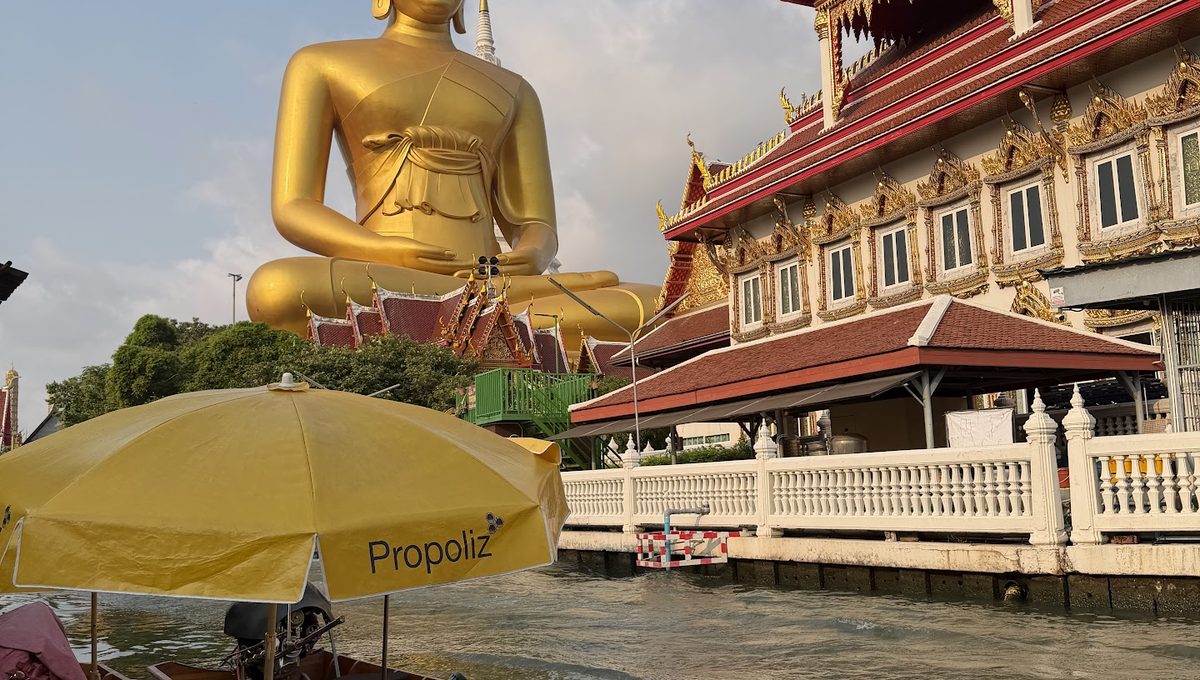
One of Bangkok's great street-food quarters, a full-size mall by the station, Wat Paknam's 69 m Buddha nearby. Local first; the expat scene is across the river.
The catches
The big re-rating already happened, no mega-project is scheduled, tenants are mostly Thai rather than expats on packages, and airport runs take a proper hour.
The play
Value arbitrage: pay for the commute and the tenant demand, skip the premium for the fashionable address. Buy it for the income it earns today.
So where is this, actually?
The shaded patch is the neighbourhood this guide covers: the streets around Wutthakat and Talat Phlu stations on the west bank of the Chao Phraya. Hover or tap any station for the train time from Wutthakat.
Three things the map makes obvious. The train runs straight over the river into the financial district: eight stops to Chong Nonsi in roughly 16 to 18 minutes, Sala Daeng and the Silom offices around the 20 minute mark, one seat the whole way. Bang Wa, one stop out, adds the MRT Blue Line, the metro loop through Tha Phra and the old town. And the river life most visitors pay hotel prices for sits just downstream: the Gold Line to ICONSIAM leaves from Krung Thonburi, eight minutes up the line.
How to read a Bangkok address
Every Bangkok area fits one of three buckets, and knowing which one you are looking at does most of the work.
1. Prime is the proven core: Thonglor, Phrom Phong, Sathorn. You pay the most and you get certainty: a liquid resale market, tenants who always come, steady low-single-digit appreciation. The growth that made these areas famous already happened, which is exactly why they cost what they do.
2. Value areas sit close to the core without the same headline growth ahead of them. You get proximity and a lower ticket, and the rent still works. What you give up is the catalyst; nothing city-changing is scheduled, so the price tends to move with the city rather than ahead of it. This guide is about a value area, and an unusually characterful one.
3. Growth corridors are the middle: real demand today, with the city's capital still visibly arriving and more upside due as the projects finish. Punnawithi and Bang Na on the east side are the textbook case.
Prime gets the headlines, and earns them; people buy Thonglor or Sathorn for the lifestyle, the schools, the certainty, and pay accordingly. The second is the quiet one. You pay for the things that actually drive returns, the train, the commute, the tenant demand, and you do not pay for the address. Wutthakat and Talat Phlu are that trade in its purest Bangkok form: one of the lowest entry prices on a line that runs directly into the Silom-Sathorn offices.
What this area is
Wutthakat and Talat Phlu are the two stops after the Silom line crosses the Chao Phraya into Thonburi, the bank where the city began. The Skytrain only reached here in 2013, prices climbed hard for a decade afterwards, and the area then settled into what it is now: a working Thai neighbourhood with a train through the middle of it. Three real drivers hold the rental demand up.

Silom-Sathorn overflow
Financial-district condos run around 230,000 baht a square metre, so many of the people who fill those offices rent along the train instead. Wutthakat is the cheap seat for that commute: eight stops, 16 to 18 minutes, one seat. Downturns change a tenant's budget far more often than they change the commute.

Siam University next door
One of Thailand's larger private universities sits minutes away on Phet Kasem Road near Bang Wa, with an international college drawing students from more than 15 countries. Students and staff churn through small units every academic year, which keeps the budget tier let and re-let without marketing effort from the owner.

The local anchor
Generations of Thonburi families are rooted here and staying. Locals want what everyone wants, the short ride to the CBD plus the district's own market life, so when they upgrade to a condo they upgrade within the district. That gives demand a stable local floor that does not depend on expats or speculation.
That is the case in one line: the financial district cannot house its own workers, the university keeps small units turning over every year, and local buyers who live here hold the floor. You buy all three streams at one of the lowest entry prices on the line.
Be clear about what you are buying and what you are skipping. The case rests on income. One 2018 industry estimate put condo prices up roughly 110 percent in the decade after the Skytrain arrived; that re-rating is finished, and no major catalyst is scheduled for another. Expect prices here to climb with the city rather than ahead of it. The tenant pool is mostly Thai professionals, students and local families, which means steady occupancy, price-sensitive rents and a mostly local resale audience. Both airports are a genuine drive. If you need a trophy address or a growth story, this is the wrong pick.
The feel of the place
This is the part listings cannot show, and it starts with the history: Thonburi was Siam's capital from 1767 to 1782, before Bangkok proper existed across the river, and this district is part of that original fabric.
That history explains what you see on the ground. The shophouse rows predate the condo era by generations, the market has traded since the 1904 railway to Mahachai came through, and the khlongs were the roads before the roads. This is an old, self-sufficient, food-rich district; it is cheap because the postcode is unfashionable, and for no other reason.


The two stations have different registers, and the difference matters when you pick a building. Talat Phlu is the lively one: the market, the 1904 railway with a working train still easing through it, shophouses turning into cafes and studios, and a full-size mall at the junction. Wutthakat, one stop further, is the quiet one: the station stands over the Khlong Dan canal, the streets are lower and slower, and the prices are among the lowest on the line. The crowd across both is Thai first: office workers on the morning platform, university students, families who have run the same shophouse for three generations, plus a steady stream of visitors heading for Wat Paknam. For a tenant that texture is the appeal, and for an owner it is the moat.
Where you'll actually eat (the superpower)

Talat Phlu is one of Bangkok's most storied food districts, and the Michelin Guide treats it as such. Tek Heng (Tae Heng Mee Krob Jin Lee) has made its crispy rice noodles since the reign of Rama V, claims the king as an early customer, and has held a Bib Gourmand for three consecutive years. Elvis Suki, another Bib Gourmand, does the dry sukiyaki people cross the river for. Around them: slow-braised beef noodles, chive dumplings made to order, and traditional kanom bueang pancakes still cooked on charcoal. The recipes are older than the buildings you are considering buying. Rent stays cheap around food this good because the cooks own their shophouses.
Coffee, the new shoots on old streets

Every mall here carries the franchise tier, and the sois around the market have grown a real independent set. LYNX is the flag-bearer, a specialty coffee bar born on Thoet Thai Road in 2016 that has since opened inside Dusit Central Park on the Silom edge. Masonia Tree & Coffee Cafe is the sit-down coffee house, MATCHAMA runs a dedicated matcha bar, Leia Cafe rounds out the set near the market, and CUPSPECTIVE and RYN Coffee cover the stretch toward Tha Phra. The signal matters more than any single shop: when inner-city rents climb, independent operators look to districts like this first, so a growing indie cafe set is an early sign of an area changing.
Malls, sorted on the doorstep

The Mall Lifestore Tha Phra, renovated top to bottom in recent years, sits at the Talat Phlu junction: a full department store, a Gourmet Market supermarket on the ground floor, an SF cinema on the fifth, a Uniqlo, and the standard international franchise tier for food and daily errands. Makro, Lotus's and Big C are all nearby for bulk runs. For the glossy tier, ICONSIAM is about 15 minutes away via the Gold Line from Krung Thonburi, and the Silom-Sathorn retail is one seat up the main line.
Nightlife, honestly local

The night out here is the night market plus a handful of local bars: lit stalls, plastic stools, eating late. The city recently gave the scene a push by reopening the renovated Talat Phlu market as a night walking street. For cocktails and clubs the answer is Silom, about twenty minutes up the line, with the last trains back around midnight. Most tenants here treat that as a fair trade, and the quiet streets at 11 pm are part of why.
Temples, khlongs and green space

The area's landmark is one of Bangkok's most striking. Wat Paknam Bhasicharoen, a 10 minute ride away, holds one of the most photographed temple interiors in Asia: the emerald-glass ceiling inside its 80 metre white stupa, with the 69 metre bronze Buddha rising above it, visible from half of Thonburi. It is a steady draw for visitors and pilgrims; people do not cross the world for it, and it does not need them to. The khlong network is still alive here too: a skywalk at Bang Wa connects to a public boat along Khlong Phasi Charoen, and Wutthakat station itself stands over the Khlong Dan canal. The honest gap is parkland; there is no large public park on this stretch, and the workaround is Lumphini, one seat to Sala Daeng, about 20 minutes.
Hospitals, schools, airports (the practical layer)
The practical layer is stronger than outsiders assume, with one honest exception at the end.

- Hospitals. Phyathai 3, a full-service private hospital serving the Thonburi side since 1996, is minutes away on Phetkasem Road. Saint Louis Hospital sits right by the Saint Louis BTS station, one seat up the line, and the Silom cluster (BNH, Bangkok Christian) is a few minutes past it. Siriraj, Thailand's most famous teaching hospital, is up the river by car. Daily medicine is close; marquee international flagships like Bumrungrad are a cross-town trip.
- Schools and universities. Siam University, with an international college drawing students from more than 15 countries, is nearby on Phetkasem Road, and it is one of the area's steady tenant sources. Thai private schools are plentiful on this bank. The catch for expat families: the big-name international schools cluster on the other side of the river, so factor a bridge crossing into any school run.
- Airports. The honest weak spot. Suvarnabhumi is roughly 45 minutes to an hour by expressway via Rama III or the elevated toll roads; Don Mueang is about the same and worse in rush hour. There is no one-seat rail link to either. Frequent flyers should price that in; everyone else notices it a few times a year.
What locals know (and listings never mention)
- The Buddha really is that big. Wat Paknam's bronze Buddha stands 69 metres, roughly a 20-storey building, begun in 2017 and finished during the pandemic. Along with the 80 metre stupa and its emerald glass ceiling, it pulls a steady stream of visitors into a district most Bangkok expats have never set foot in.
- The market grew from a railway, and the railway still runs. Talat Phlu station on the Mahachai line opened in December 1904, and dozens of services still rattle through the market daily. Note the trap: the State Railway of Thailand station is 1.2 km from the BTS station of the same name.
- You have seen this neighbourhood in a cinema. The 2024 Thai box-office hit "How to Make Millions Before Grandma Dies" was shot around Talat Phlu and its railway station, which put the quarter's shophouse lanes in front of audiences across Asia.
- Wutthakat also has a stop on the old seaside railway. The State Railway of Thailand's Maeklong commuter line, known locally as the Mahachai line, gained a halt about 150 metres from Wutthakat BTS in October 2020. It is a slow, scenic train down to the seafood town of Mahachai, connecting onward toward the Maeklong umbrella market: charming and occasionally useful, while the actual commuting happens on the BTS.
- The name means betel market. Phlu is the betel leaf; this was the city's betel trading quarter when chewing it was polite society's habit, which is how a market this old ended up with its own train stop.
- A khlong boat hides in the interchange. The Bang Wa skywalk drops onto a pier for the Khlong Phasi Charoen public boat, one of the last working canal commutes on this side of the river.
- More rail is on the long-term map. The planned State Railway of Thailand Dark Red Line extension toward Mahachai is slated to stop at both Talat Phlu and Wutthakat. Treat it as a footnote; there is no committed date.
Getting around
The whole case rides on one fact: the Silom line runs from here straight into the financial district with no line change. By car, Ratchaphruek Road feeds the Taksin Bridge into Sathorn, and Ratchada-Tha Phra connects outward to Rama III.
| Where | How far |
|---|---|
| Around the neighbourhood the market, The Mall, the interchanges | Talat Phlu and Bang Wa (MRT Blue Line) ~2 min by BTS; Wongwian Yai ~6; Krung Thonburi (Gold Line to ICONSIAM) ~8 |
| Into town the river, the offices, the parks | Saphan Taksin ~11-13 min; Chong Nonsi (8 stops) ~16-18; Sala Daeng / Silom ~20; Siam ~24-26, one seat, no change |
| Airports | Suvarnabhumi ~45-60 min by car; Don Mueang ~45-60+ and worse at rush hour; no one-seat rail link to either |
Who lives here, and who rents from you
Be honest about this pool: it is deep, and it is mostly Thai and local. Three kinds of tenant meet on this stretch.
1. Sathorn and Silom commuters. The overflow. Office workers who want a direct, no-change ride to work without central rents. Their employer sits 16 to 18 minutes away and cannot house them; that is the structural anchor, and it holds through downturns because the commute survives budget cuts.
2. Siam University students and staff. One of Thailand's larger private universities sits minutes away on Phet Kasem Road, its international college drawing students from more than 15 countries, and the lease cycle renews every academic year.
3. The healthcare cluster. Phyathai 3 staff, patients' families, and the longer medical stays a full-service hospital generates. Together with the students, this is renewable, recession-resistant demand.
What you will not get much of is the Western expat on a housing allowance; that tenant lives on the other bank, and pricing your unit as if he were coming is the classic mistake here.
What it costs, and what it earns
First, the arbitrage that makes this area worth a page at all. Count the stops from Siam, then look at the price per square metre.
| Station, each 10 stops from Siam | Branch | Avg asking / sqm |
|---|---|---|
| Talat Phlu (S10) | Silom line, Thonburi | ~THB 95,000 |
| Bang Chak (E10) | Sukhumvit line, east | ~THB 135,000 |
| Phaholyothin 24 (N10) | Sukhumvit line, north | ~THB 160,000+ |
Same count of stops to the heart of the city, roughly 25 to 30 percent less than the same-distance Sukhumvit stations, and about 40 percent below the citywide median per square metre. The train is identical; the discount is the postcode, and here you choose not to pay for it. One caveat that keeps this honest: these are area averages across mixed stock from listing aggregators (early 2026), so always compare like for like, budget to budget and branded to branded.
Now the ladder. The unusual thing here is how narrow the spread is: because the whole area is value-priced, stepping up from the barest building to the branded one costs you only a point or two of yield, versus four or five in Sukhumvit. That makes the quality option relatively more attractive here than almost anywhere on the other bank.

~6.5-8.5% gross · 1-beds around 1.5M THB

~5-6% gross · 1-beds around 3.0-3.8M THB
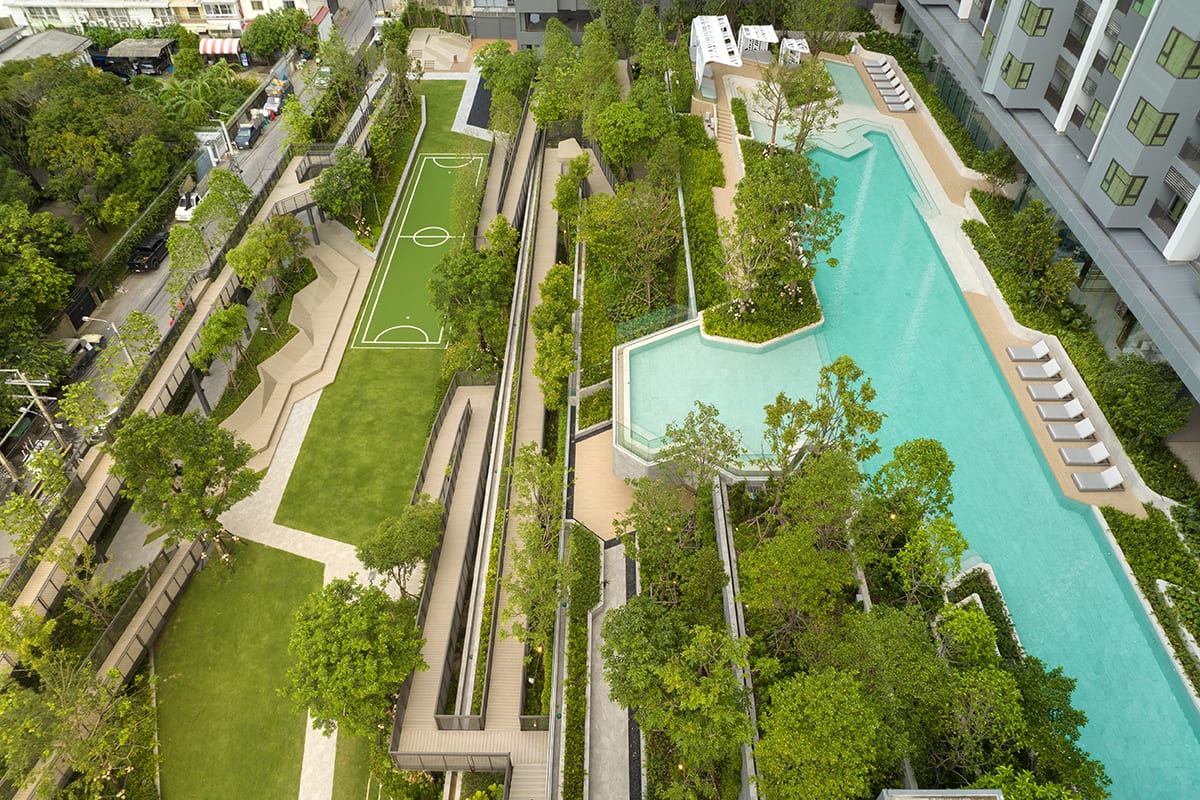
Life Sathorn Sierra (AP) · the branded one
~5-5.5% gross · studios and 1-beds around 3.0-4.7M THB
Which kind of buyer are you?
The value-and-income buyer
This is your area. You want dependable yield and one of the lowest entries onto a financial-district line, and you are paying for the commute and the demand rather than the address. The friend who calls it far is reading a map from before the train crossed the river.
The prime buyer
If you are buying a base for your own life, the school run, the office, the restaurants, the resale certainty, the proven core does that better: Thonglor, Phrom Phong, Sathorn. That is a different product bought for good reasons, lifestyle and liquidity at a premium, and this guide will not talk you out of it.
The growth-first buyer
If maximum capital upside is the goal, an emerging corridor like Punnawithi or Bang Na fits better: more risk, more scheduled catalysts, more potential. This area is the steadier sibling. Buying here and expecting a boom is buying the right street for the wrong reason.
Within the area, match the rung before the unit: income, middle, or branded, in that order of questioning.
Placing it against its neighbours
Toward the city: Pho Nimit, Wongwian Yai, Krung Thonburi. Denser, more amenity, a little pricier as you approach the river, and Krung Thonburi adds the Gold Line to ICONSIAM. Choose that direction for a touch more polish and connection; choose here for the lower ticket and the market life.
Between the two stations. Talat Phlu is the cultural heart: the market, the food, the mall, and the branded stock like Life Sathorn Sierra. Wutthakat is one stop quieter and cheaper, the value sweet spot with some of the highest yields on the line. Neither is wrong; they answer different tenants.
Outward: Bang Wa and the Phetkasem corridor. One more stop buys the MRT Blue Line interchange and the gateway to Bangkok's south-west. Prices soften further out, but the one-seat simplicity into Silom weakens with distance, and that one-seat ride is precisely the thing this area sells.
The bottom line
Wutthakat and Talat Phlu reward the buyer who wants dependable rental income on a financial-district train line. You get a century-old food quarter, a full-size mall, an attraction-drawing temple next door and tenant demand that is structural, at one of the lowest entry prices on the line. The area quietly punishes anyone who arrives expecting a boom, an expat rental market, or a quick airport run. Pay for the commute, collect the rent. If you want to weigh it against Punnawithi's growth story or the prime core, that is exactly the comparison Nara is built to walk you through.
Frequently asked questions
Is Talat Phlu or Wutthakat a good area to invest in?
It suits a buyer who wants strong rental income at one of the lowest entry prices on a line that runs one seat into the Silom-Sathorn financial district. Asking prices run roughly 25 to 30 percent below same-distance Sukhumvit stations for identical connectivity. It is a value-and-income play; the big price re-rating happened in the decade after the Skytrain arrived in 2013, so buy it for what it earns today rather than for a second boom.
What rental yield can I expect around Wutthakat and Talat Phlu?
Roughly 5 to 8.5 percent gross depending on the rung: budget buildings like Regent Home Wutthakat at the top of the range, branded stock like Life Sathorn Sierra around 5 to 5.5 percent. Net runs about 1 to 1.5 points lower after fees, withholding, management and vacancy. These are Tenara estimates from comparable units; check live comps per building.
Isn't Thonburi the wrong side of the river?
That reaction is running on a map from before the Skytrain crossed the river in 2013. The train from Talat Phlu into the financial district is one seat with no change, the same number of stops from Siam as stations charging 25 to 30 percent more on the Sukhumvit side. The premium elsewhere is the address, and here you choose not to pay it. Paying for the commute rather than the postcode is the informed move.
How far is it from the offices and the airports?
By BTS from Wutthakat: Saphan Taksin and the river in about 11 to 13 minutes, Chong Nonsi in 16 to 18 (eight stops), Sala Daeng in about 20, Siam in roughly 25, all one seat. The airports are the weak spot: Suvarnabhumi is roughly 45 minutes to an hour by car and Don Mueang about the same, with no one-seat rail link to either.
Who would rent my unit here?
Mostly Thai tenants, and that is the honest strength: Silom and Sathorn office workers who need a direct commute, students and staff from Siam University and its international college, and the healthcare cluster around Phyathai 3, staff, patients' families and longer medical stays. Renewable, recession-resistant demand, but price the unit for this pool rather than for expats on housing packages.
What is there to actually do in Talat Phlu?
Eat, mainly, and at a level most of Bangkok envies: the quarter has fed people since the 1904 railway arrived, including Michelin Bib Gourmand holders like Tek Heng, crispy-noodle specialists since the reign of Rama V. The Mall Lifestore Tha Phra covers shopping and a cinema, Wat Paknam's 69 metre Buddha and glass-ceiling stupa are minutes away, and ICONSIAM is a Gold Line hop from Krung Thonburi.
Can foreigners buy a condo here?
Yes, freehold and in your own name, subject to the 49 percent foreign-ownership quota per project. A unit being available does not guarantee foreign quota is open on it, so confirm that first. Funds must be remitted from abroad in foreign currency to generate the Foreign Exchange Transaction (FET) certificate needed to register title, with the remitter's name matching the buyer's exactly.
Figures, prices and venue details in this guide come from developer material, public listings and other public sources at the time of writing, and they move faster than any page can. Treat every number as indicative rather than a quote, and confirm live pricing, availability and foreign-quota status with us before deciding anything. Nothing here is financial advice.
Thinking about this side of the river?
Tell Nara your budget and whether you want income, a place to live, or both, and it will line up the buildings that actually fit and flag the ones to skip. No developer bias, no agent chasing.
Ask Nara about Wutthakat →